BROILERS AND LAYERS
Optimal ventilation, microclimate, and lighting during the rearing phase
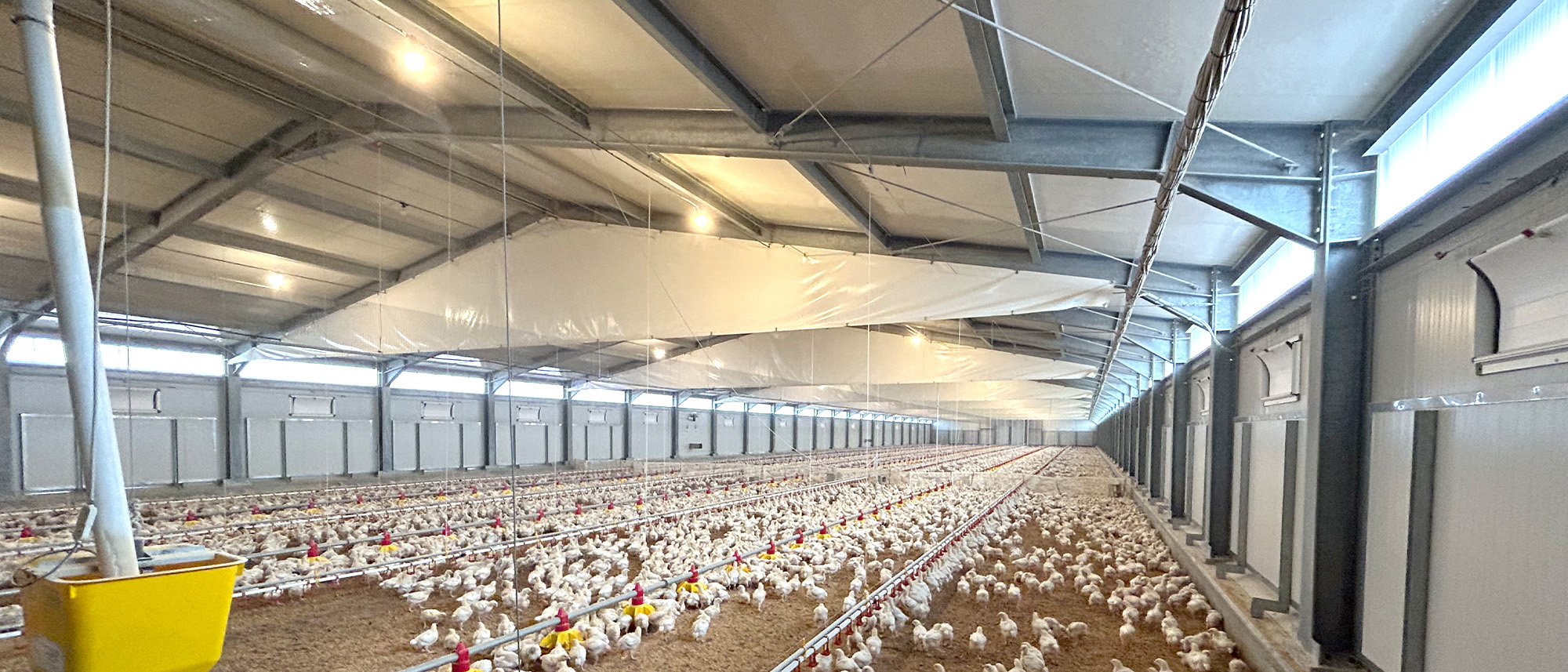
Integrated Rota Guido systems for ventilation, cooling, heating, and lighting automatically regulate the microclimate, ensuring optimal environmental conditions in every season.
AIR DISTRIBUTION AND EXCHANGE
Natural and/or mechanical ventilation
Depending on geographic location, farming system, and production type (e.g. organic or free-range), two different ventilation systems can be adopted, varying in cost and level of environmental control: natural ventilation and mechanical ventilation.
AIR DISTRIBUTION AND EXCHANGE
Natural ventilation
This system is based on air exchange generated by convective flows induced by temperature differences between the inside and outside of the house. The greater the difference, the more effective the air exchange.
However, with natural ventilation systems, it is not possible to ensure consistent environmental conditions under changing weather and stocking conditions, as these are passive systems influenced by external climate factors (temperature, humidity, wind, building orientation, surrounding topography, vegetation, etc.).
Natural ventilation is typically adopted in free-range systems or where access to outdoor areas is provided.
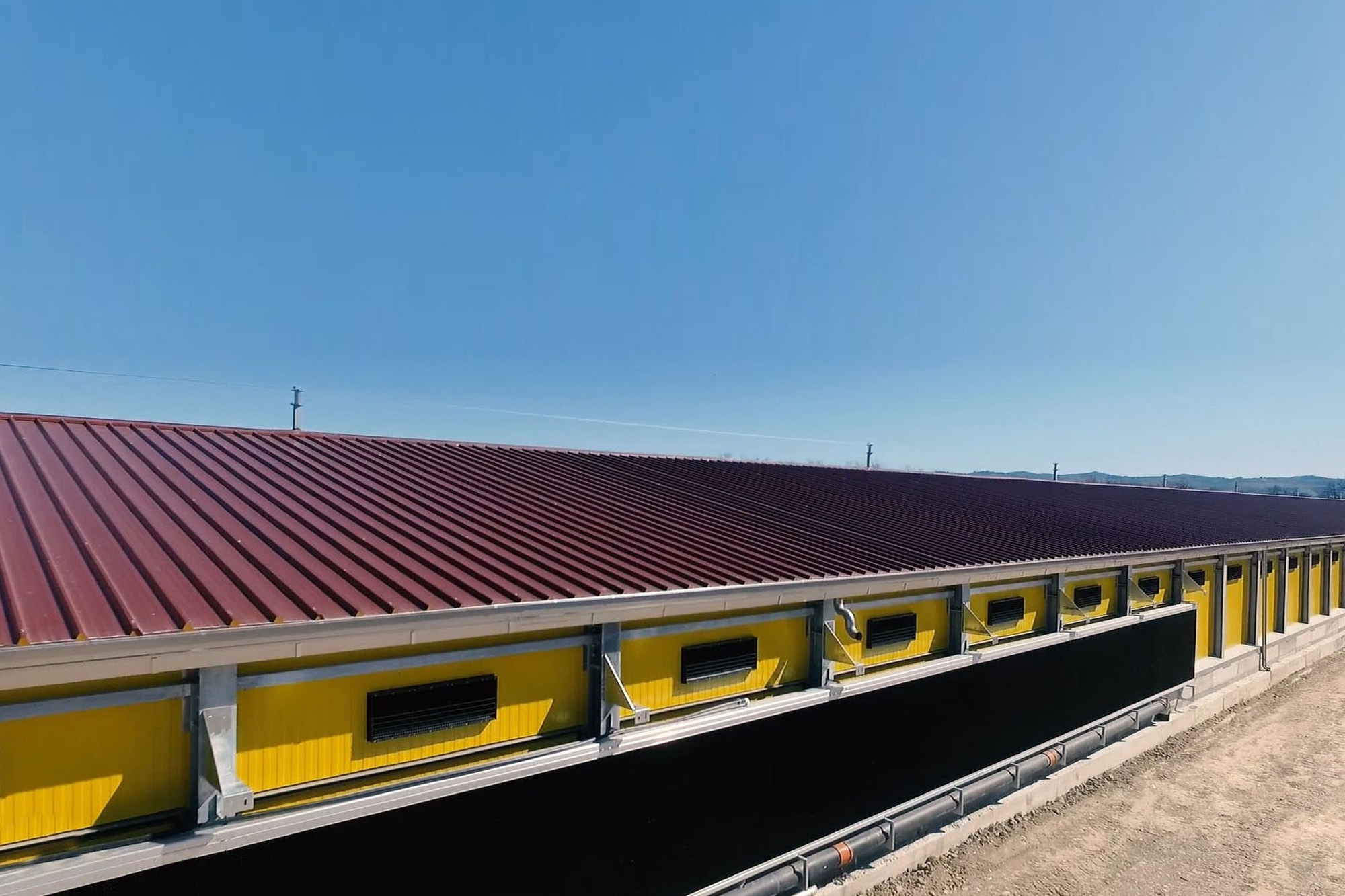
AIR DISTRIBUTION AND EXCHANGE
Mechanical ventilation
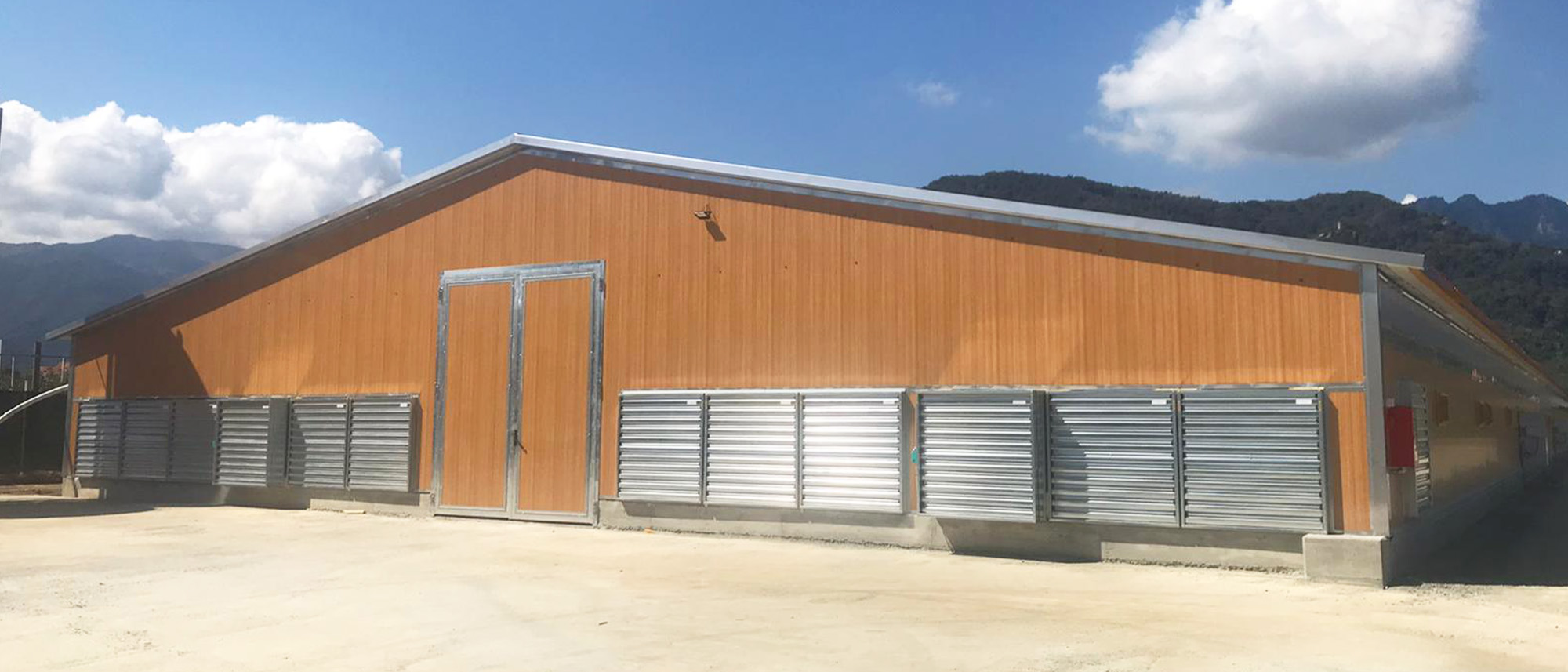
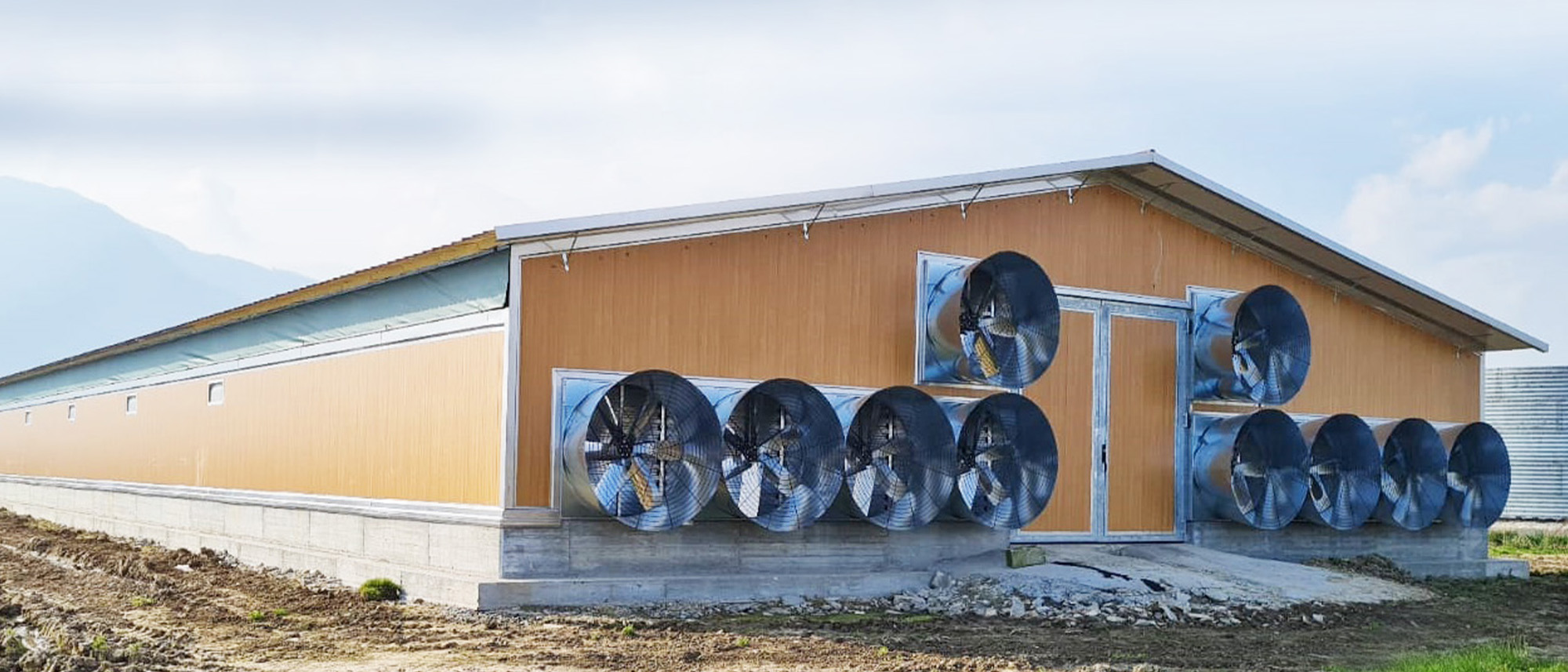
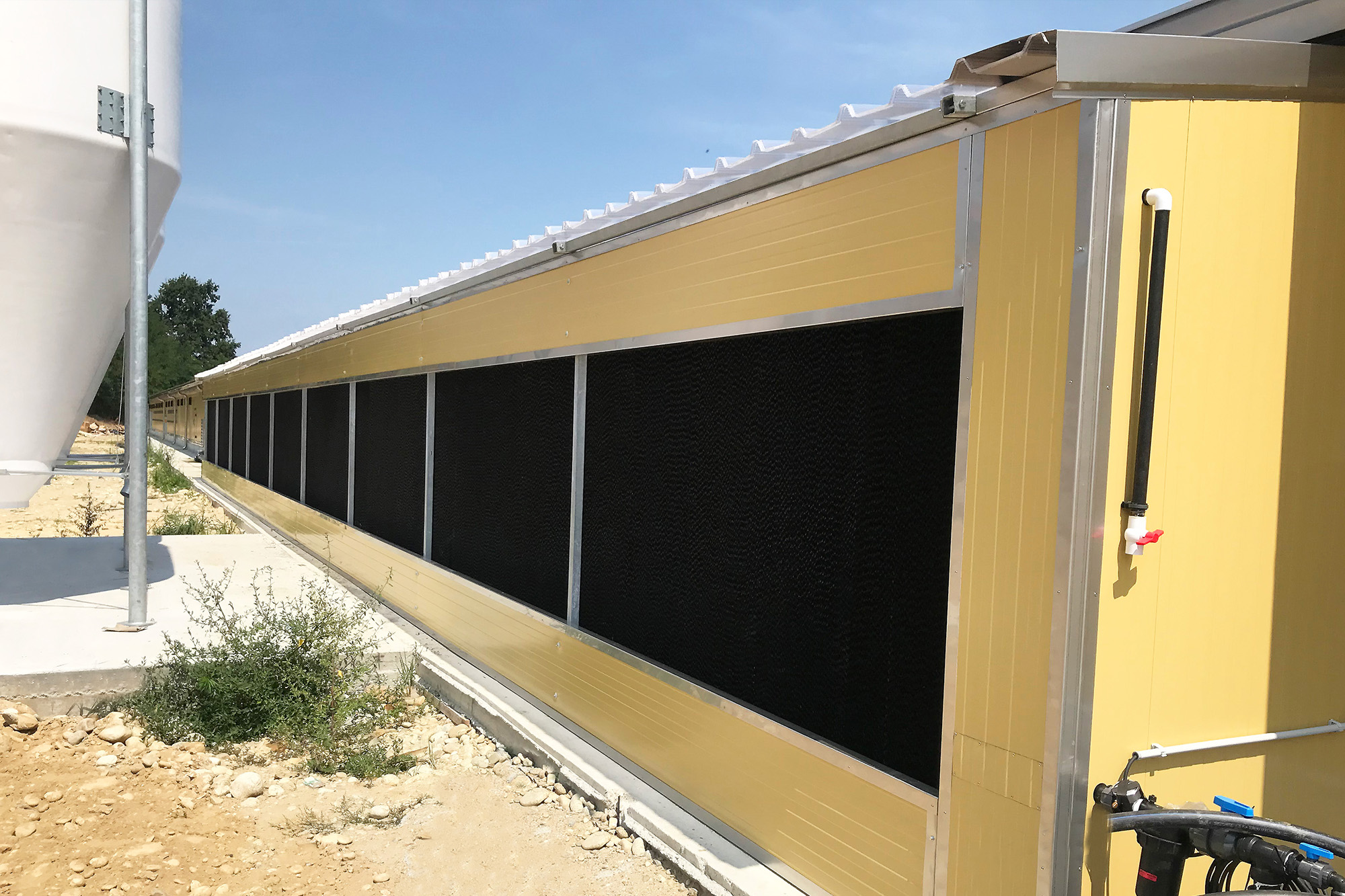
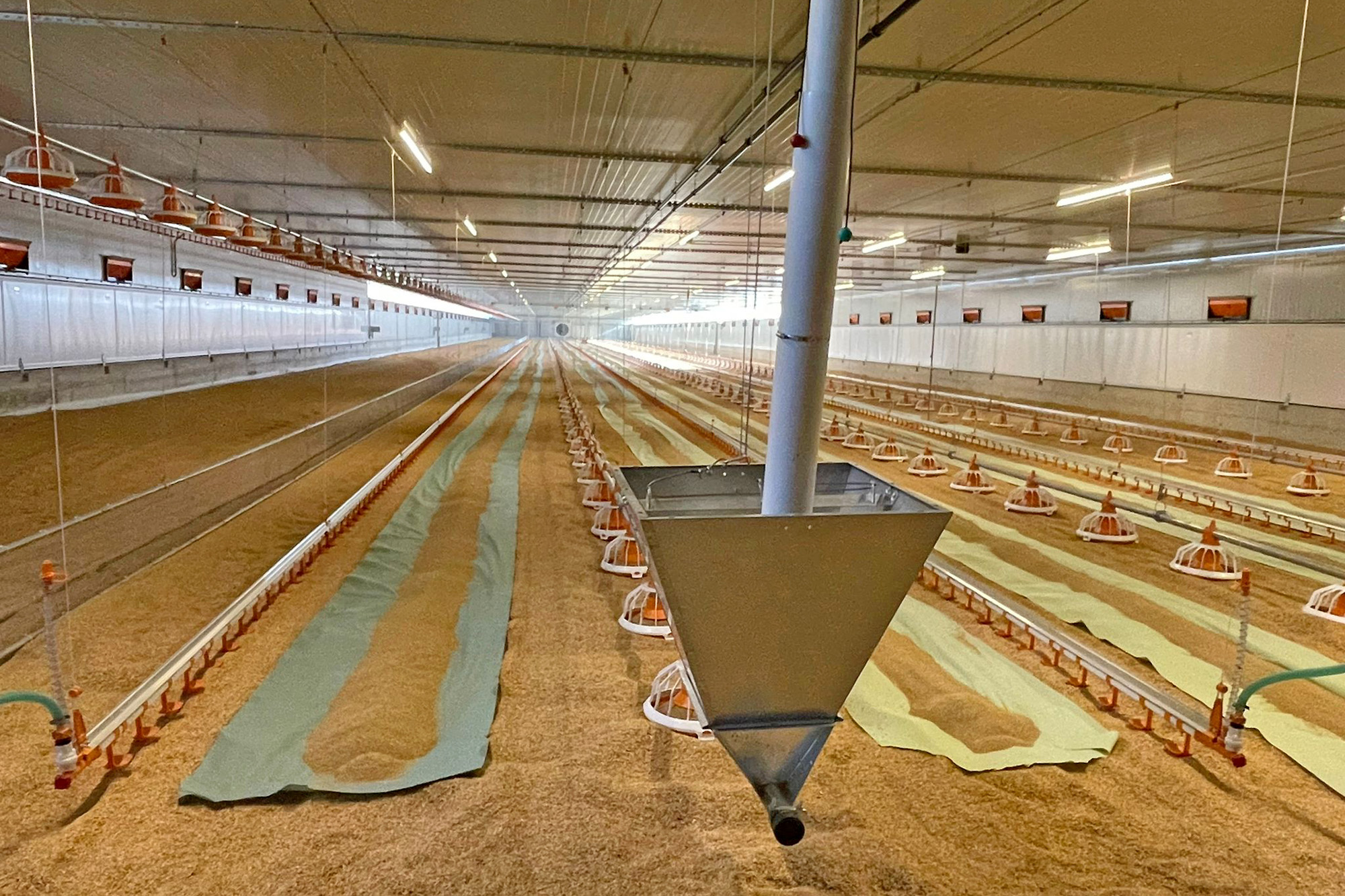
This is a ventilation system, generally operating under negative pressure, based on exhaust fans installed on walls or roofs (chimneys), controlled by an electronic system that regulates airflow according to the difference between target and actual temperature inside the house.
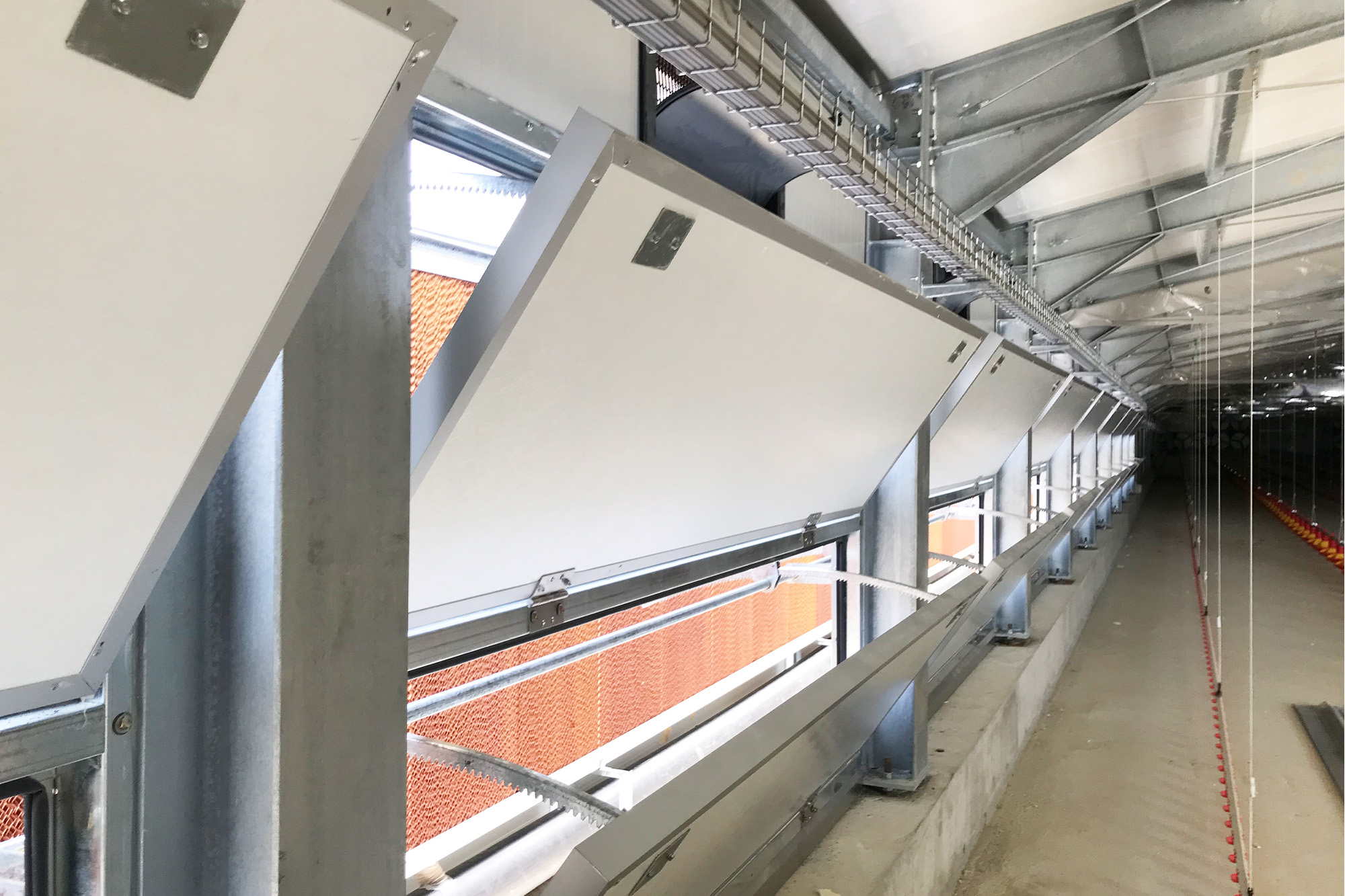
When air exchange alone is not sufficient, auxiliary systems are activated: cooling (adiabatic) or hot-air heating. Air enters through aerodynamic inlets, automatically adjusted according to pressure (3–5 Pa), ensuring proper airflow distribution.
The goal is to maintain optimal air quality and humidity levels, preventing gas accumulation and condensation, improving animal welfare and litter quality.
Rota Guido facilities are designed using dedicated calculation models to properly size ventilation, climate control, and insulation, eliminating thermal bridges—even in underground sections. This results in lower energy consumption and drier, healthier litter.
EMISSION CONTROL
Dust and odor reduction
Compatibility between livestock farming and non-agricultural environments is now a key design factor. To address this, Rota Guido develops solutions aimed at reducing emissions—both dust and gases—through two levels of intervention: dust barrier systems (BAT 13c) and air washing technologies (BAT 13d).
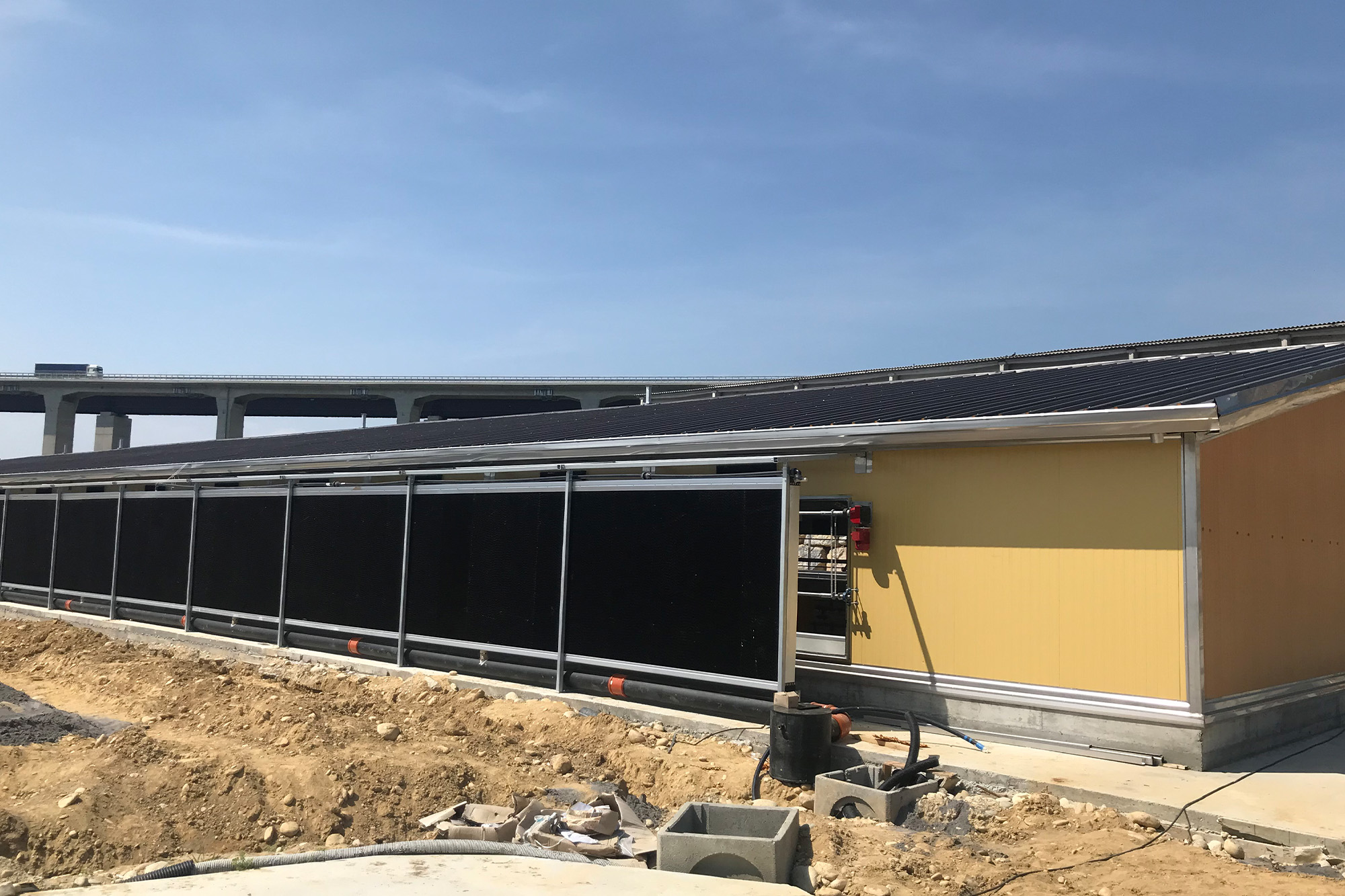
EMISSION CONTROL
Dust barrier (BAT 13c)
This consists of a physical barrier installed downstream of exhaust fans, which deflects airflow upward, promoting dispersion and reducing dust concentration at lower levels. It is mainly applicable in tunnel ventilation systems and is effective only for dust, not gases.
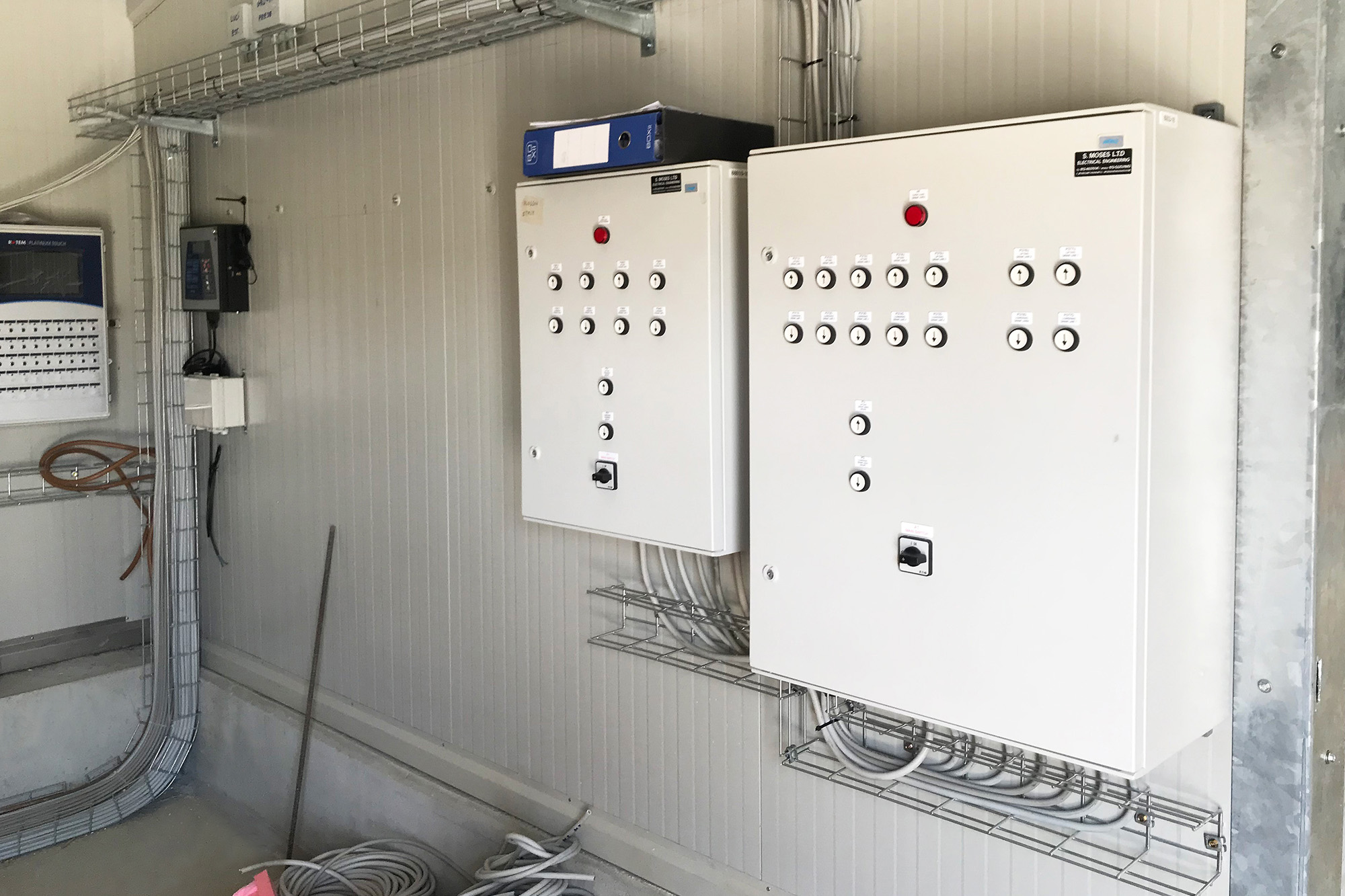
EMISSION CONTROL
Air washing (BAT 13d)
A more advanced system that uses a plenum with atomized water to “wash” the extracted air: dust particles are captured and retained, while ammonia can be reduced:
- approximately 20–25% without additives
- up to 50–80% with acid additives (e.g. sulfuric acid)
In summary, this approach moves from simple dust dispersion to actual air treatment, providing a more comprehensive and effective solution.
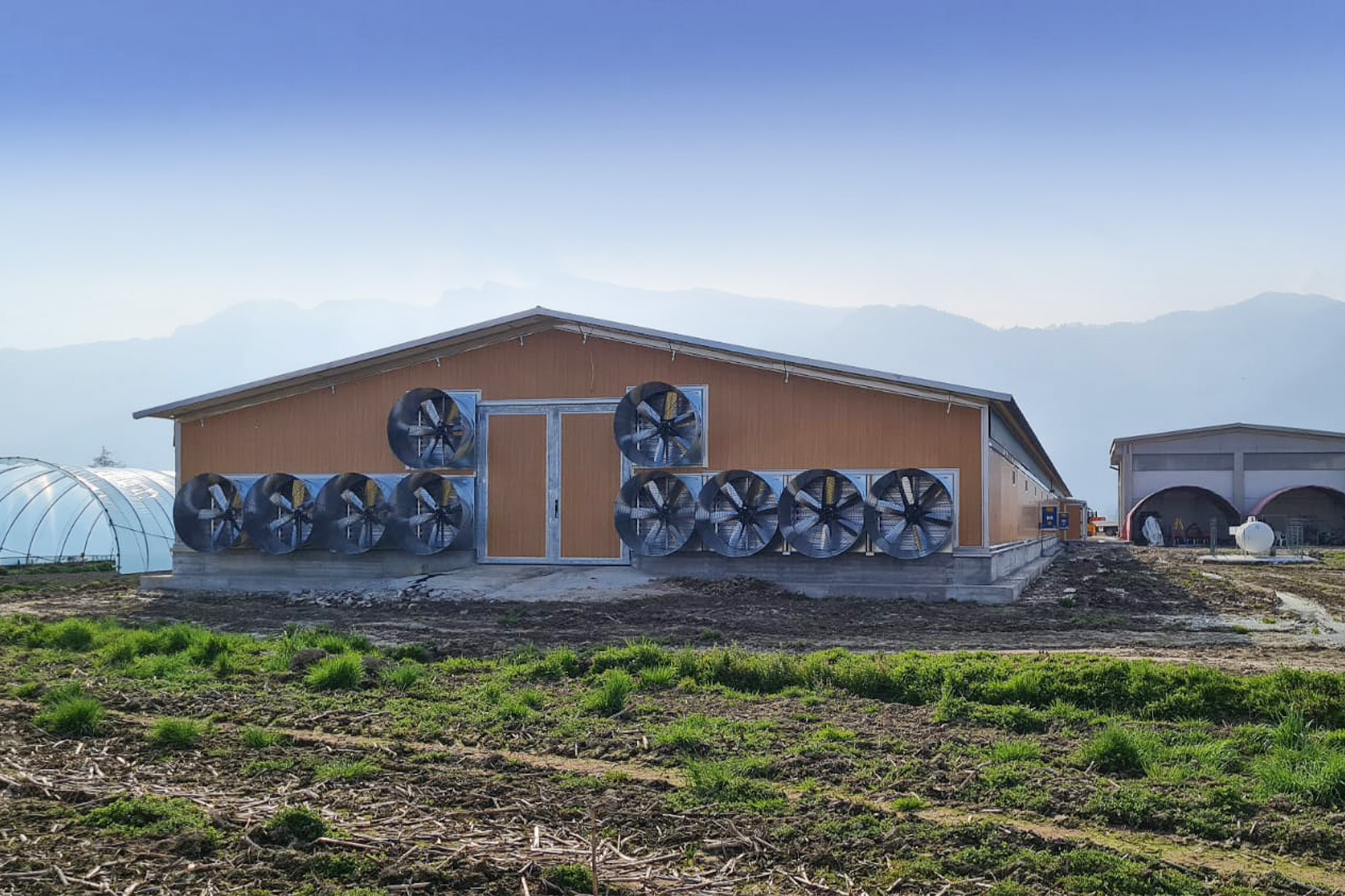
CONTROLLED GROWTH CURVE
Temperature
Temperature management follows a decreasing curve throughout the cycle:
- at the beginning: around 30–33 °C
- at the end of the cycle: 18–21 °C
As a general guideline, a reduction of 2 °C approximately 2 °C per week can be considered, to be adjusted based on animal response and actual housing conditions.
ENVIRONMENTAL BALANCE AND QUALITY
Humidity
Relative humidity (RH) should also follow a controlled trend:
- at placement: approximately 50%
- around 30 days of age: up to approximately 70%
It is important not to exceed 80% relative humidity, to preserve litter quality and animal comfort.
LIGHTING
LED lamps
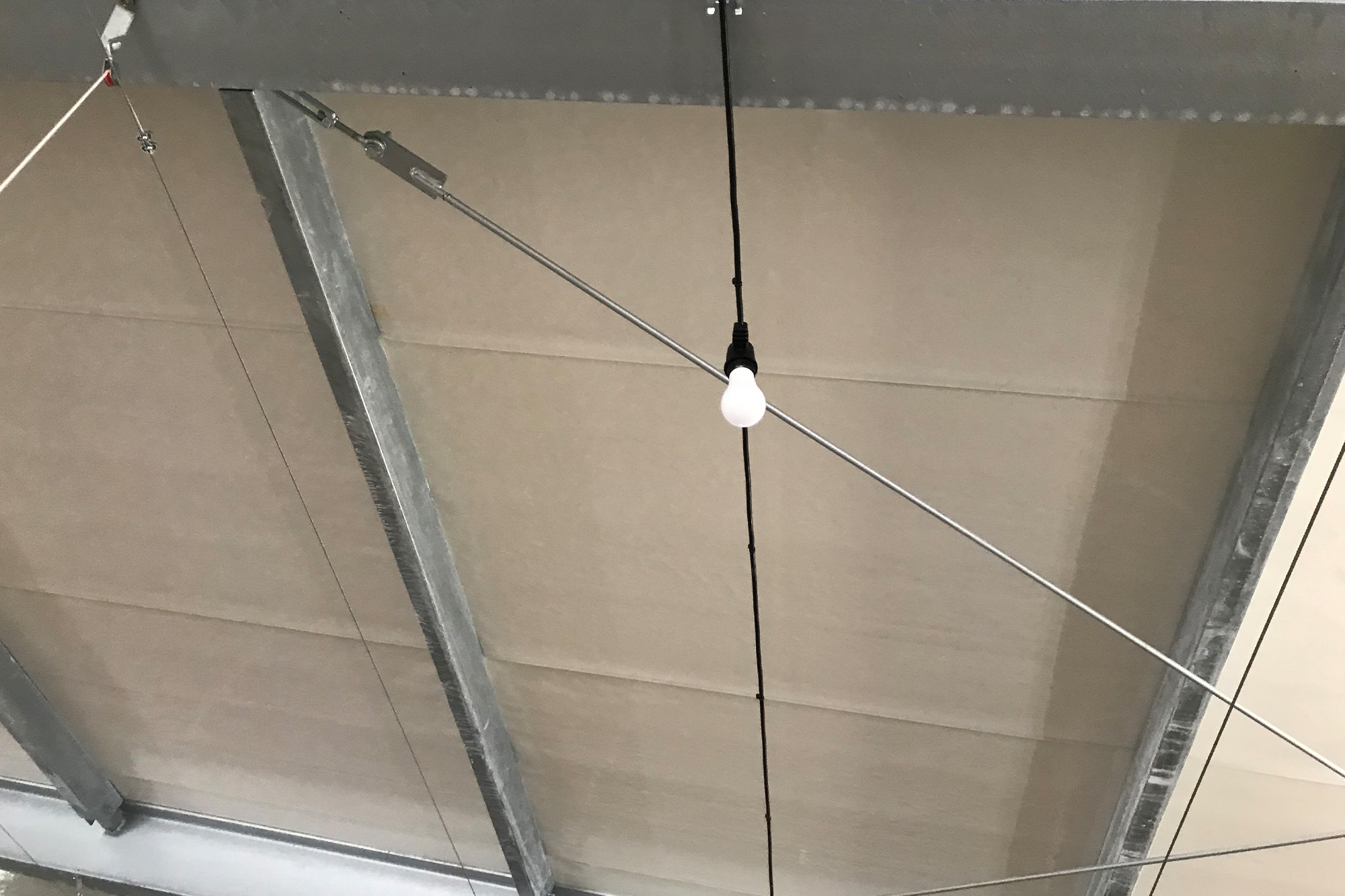
Lamps designed for livestock environments, durable and fully waterproof (IP66), made of impact-resistant polycarbonate. They ensure up to 30,000 hours of operation with consistent light output.
Available in different power ratings and color temperatures, they allow proper photoperiod management. The wide beam angle ensures uniform light distribution throughout the house, meeting high standards of efficiency and safety.
ADVICE
Request a consultation
Please do not hesitate to contact us
Rota Guido’s technical and sales team is at your complete disposal for any enquiries or information you may require