BIOGAS PLANTS
Over 450 plants built
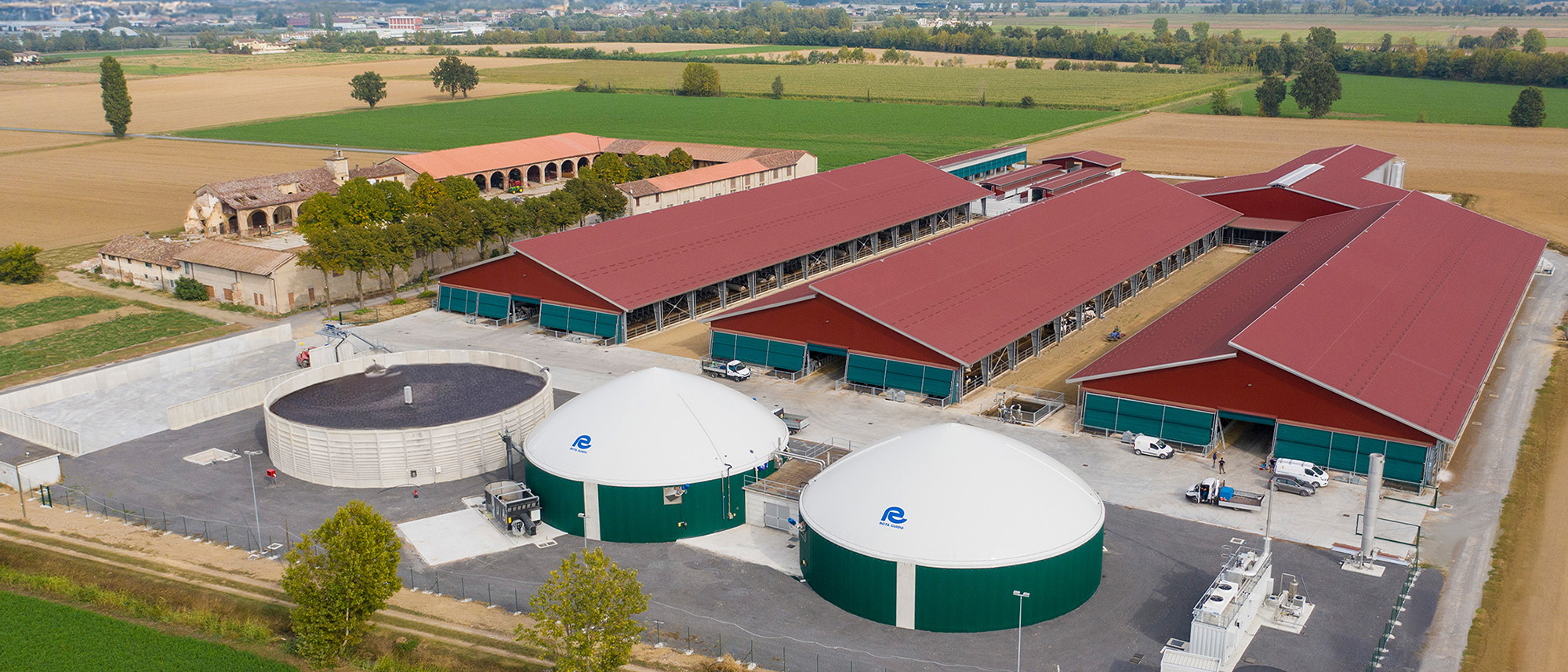
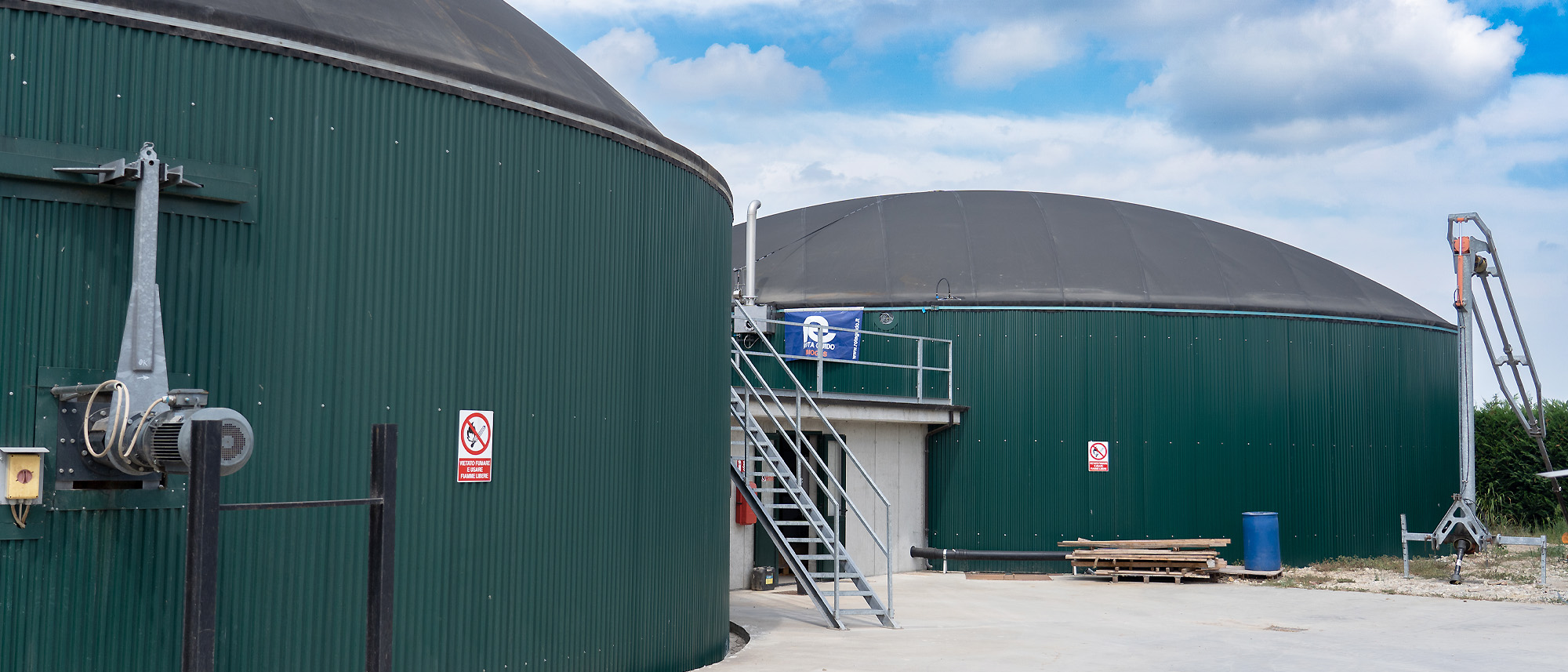
The growing interest in the biogas sector has led to the entry into the market of numerous component suppliers and assemblers. However, building a truly efficient plant requires integrated engineering, biological and management expertise, which are essential for ensuring process stability and long-term performance.
Rota Guido brings decades of experience in the sector to the table, offering comprehensive plant design, construction and maintenance services, with solutions designed to ensure operational reliability, continuous production and consistent energy yield over time.
TAILORED ADVICE AND SUPPORT FOR APPLYING FOR GRANTS
Incentives, project planning, installation and after-sales support
Rota Guido supports agricultural businesses at every stage of the project: from the initial technical assessment and applying for grants and available incentives, through to the installation of the system and after-sales service.
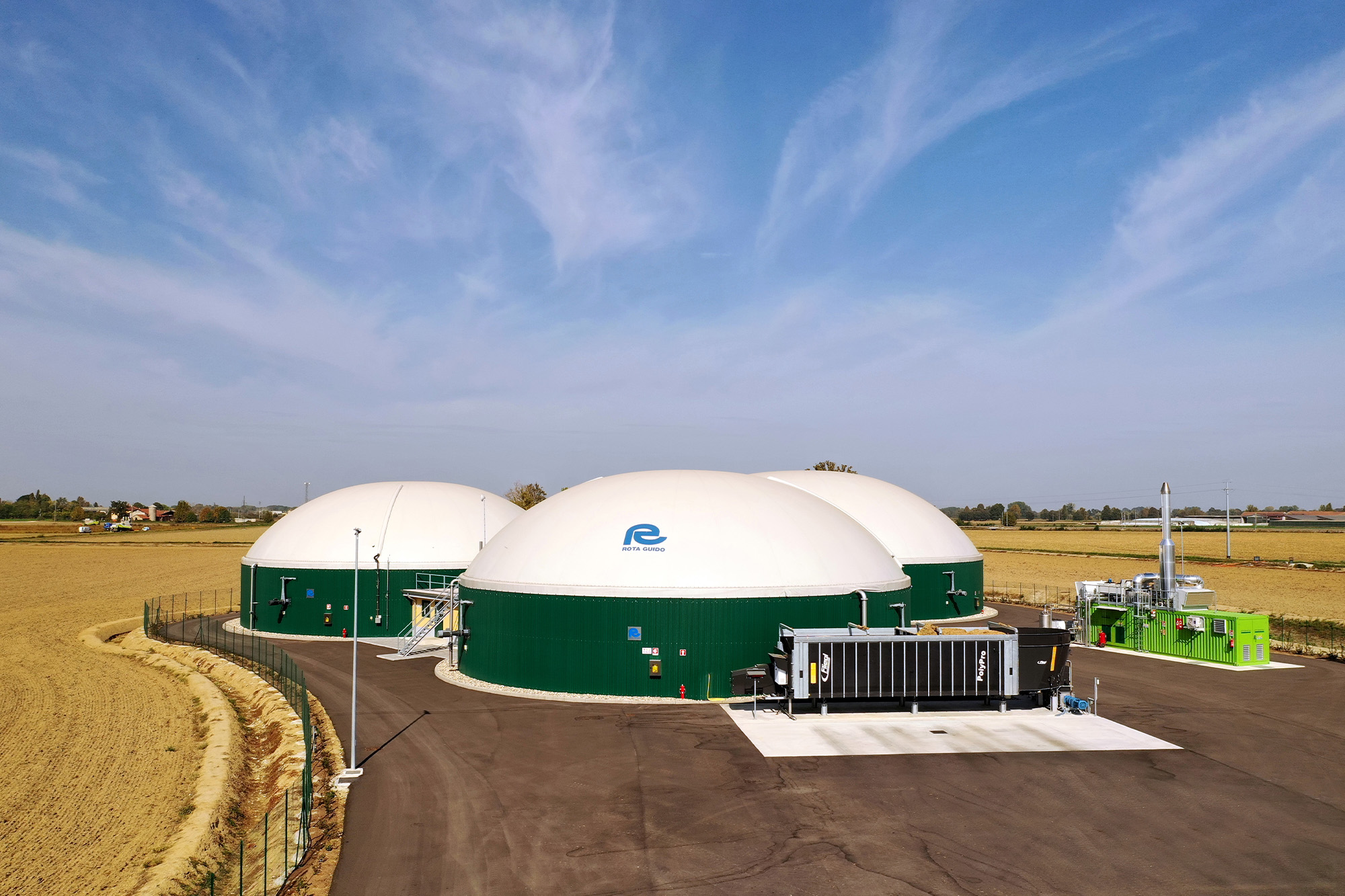
FROM BIOMASS TO BIOGAS
The energy production process
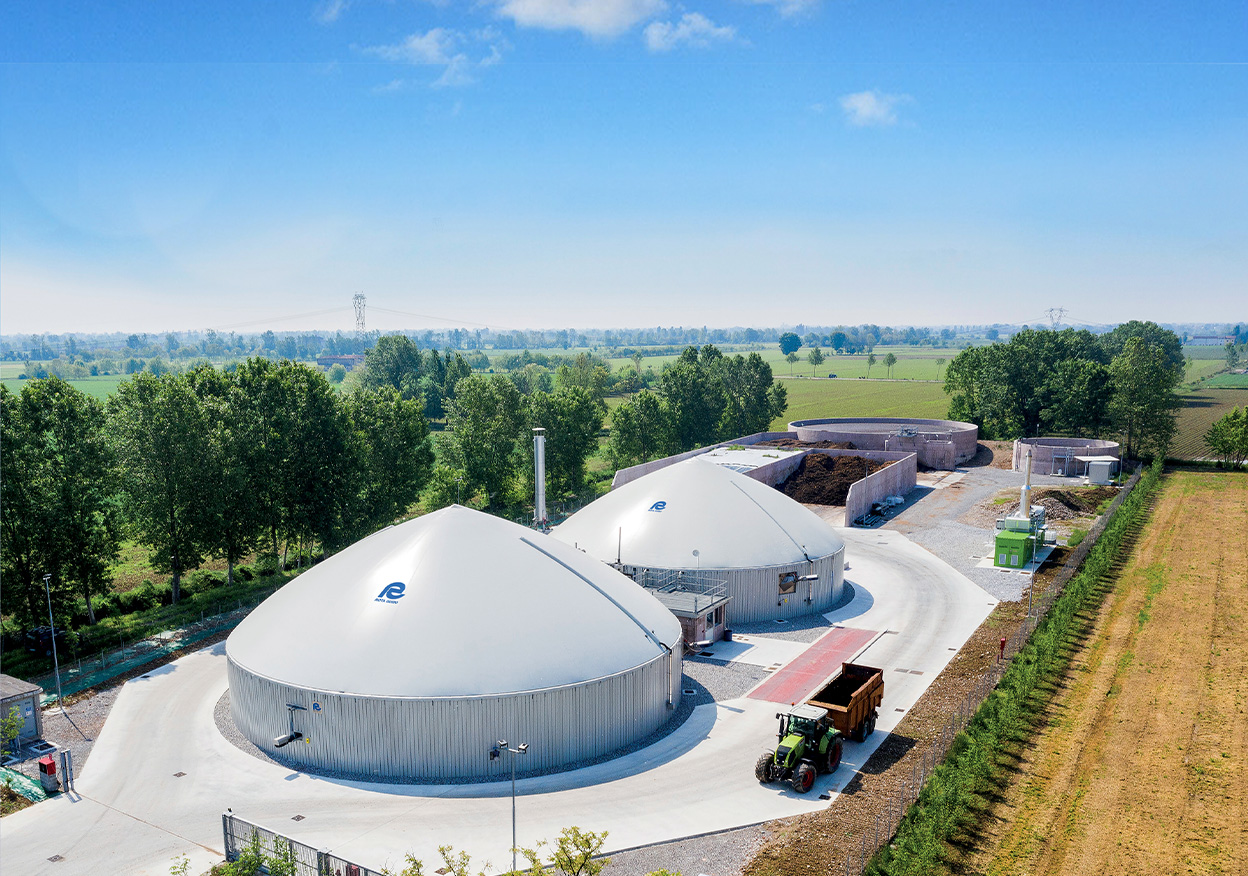
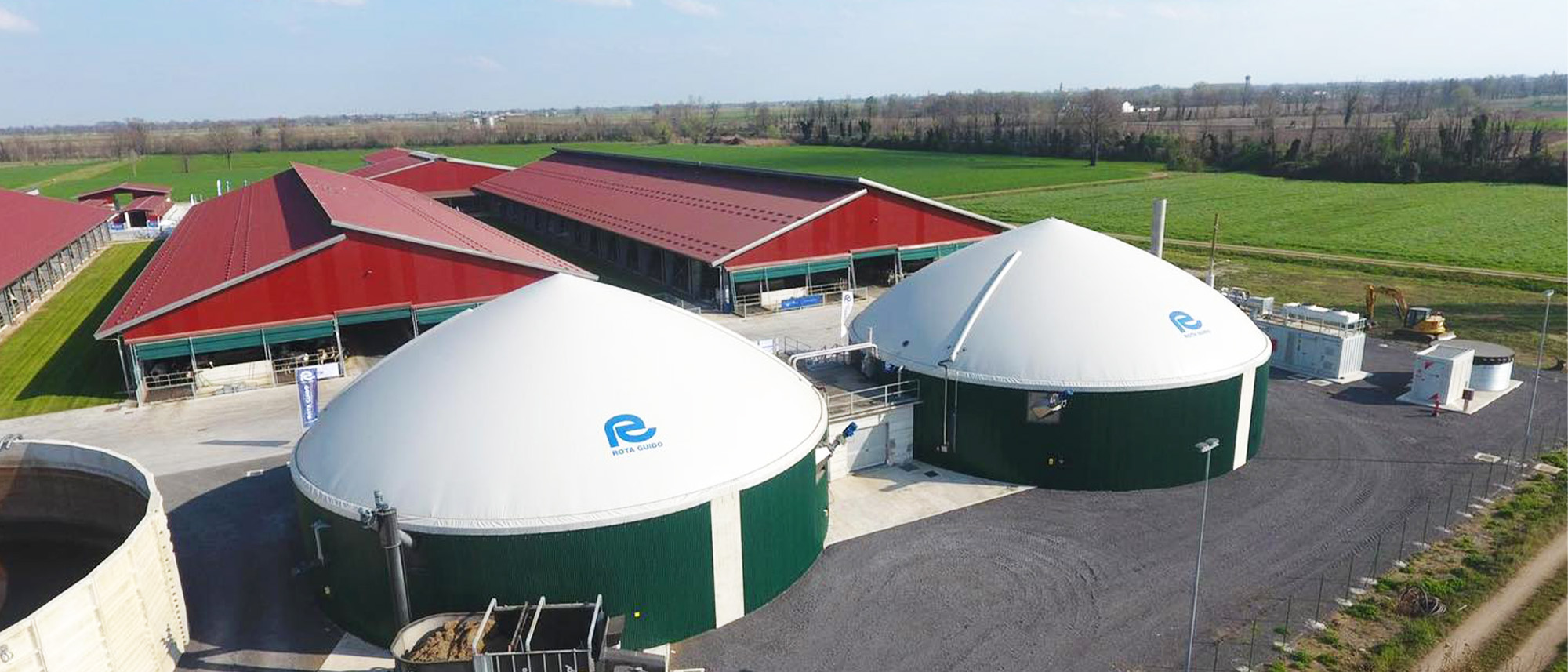
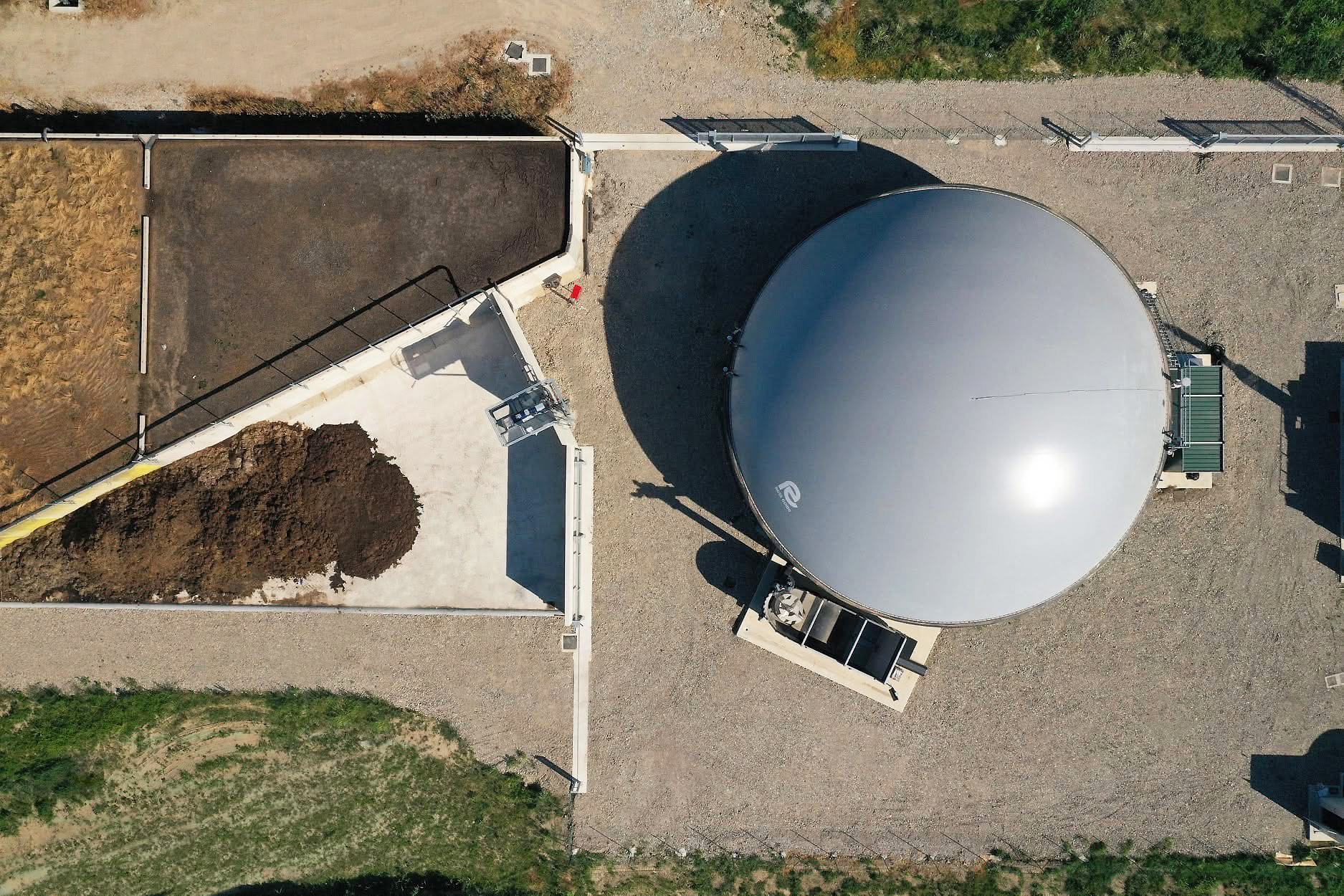
A biogas plant produces energy through the anaerobic fermentation of organic matter inside sealed digesters.
The process takes place under controlled conditions, at temperatures between 38°C and 55°C, and enables biomass and organic waste to be converted into biogas.
The gas produced consists mainly of:
- Methane (CH₄), used to generate energy
- Carbon dioxide (CO₂)
Biogas makes a significant contribution to renewable energy, providing a constant and predictable source of energy, unlike intermittent sources such as solar and wind power. Its main advantage lies in its flexibility: it can be used to generate electricity or heat, or converted into biomethane to power vehicles or fed into the gas grid.
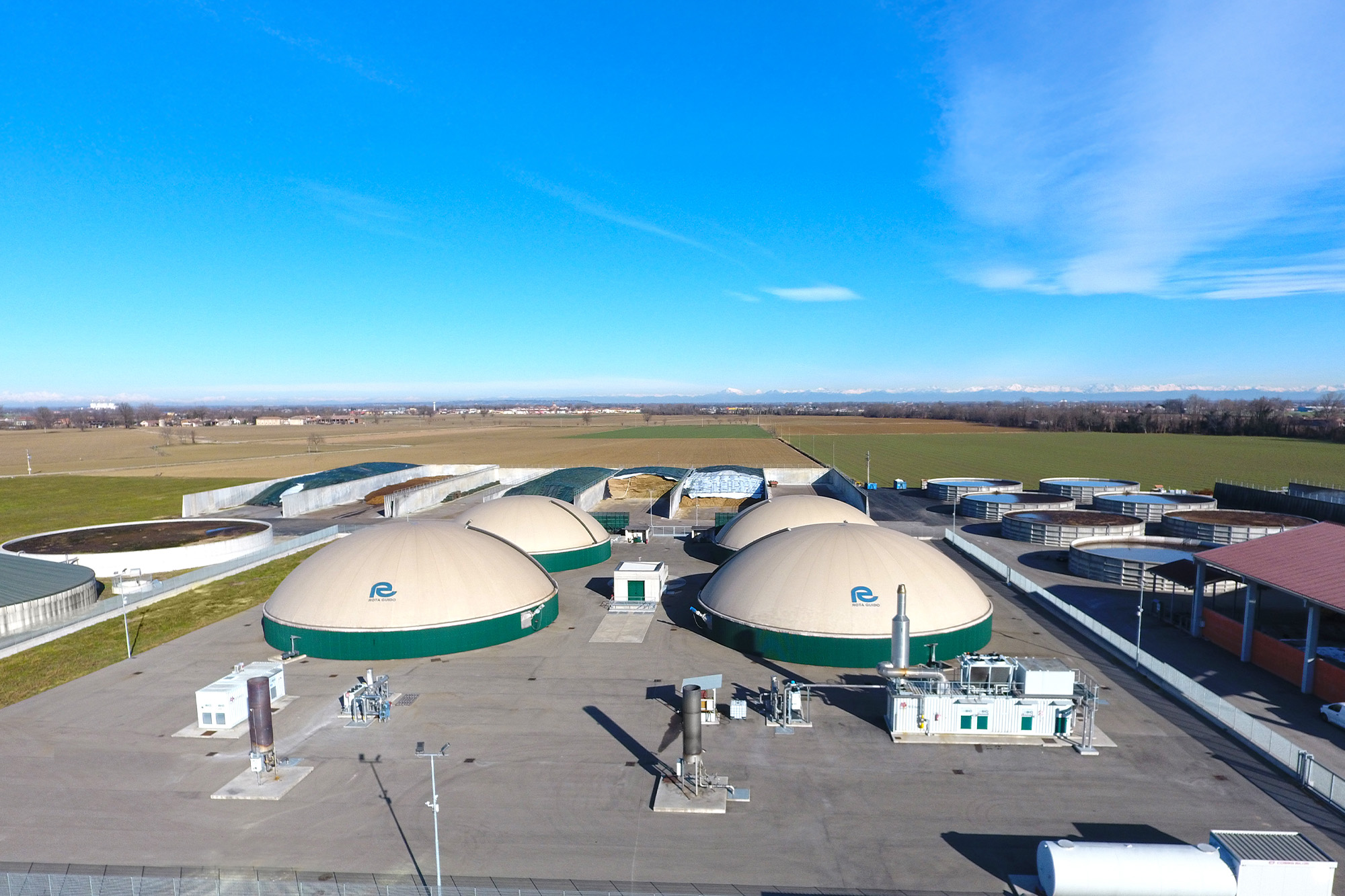
The main sections of a plant
The digester is fed with liquid and solid biomass derived from livestock manure or other organic sources.
The liquid fractions are pumped and mixed in special equalisation tanks, whilst the solid materials are fed via hoppers with feed screws.
Inside the digesters, microorganisms convert the biomass into biogas.
The following are essential to ensure process stability:
- continuous mixing with Rotamix agitators
- controlled heating via internal coils
- pressure-controlled covers for gas management
The biogas produced undergoes various treatments to improve its quality:
- biological desulphurisation to reduce H₂S
- dehumidification to remove water vapour
- filters and purification systems to protect the engines
A continuous gas analysis system monitors the quality of the biogas and the conditions of the biological process.
The biogas powers high-efficiency combined heat and power units, which convert the gas into:
- electricity
- recovered thermal energy
The heat produced is reused to maintain the temperature of the digesters or for other energy-consuming processes within the plant.
The plants are equipped with devices designed to ensure maximum operational safety:
- gas lines with safety valves
- illuminated inspection hatches for internal monitoring
- flare torches for excess biogas
The digestate is transferred via single-screw pumps to dedicated storage or treatment systems.
Depending on the company’s requirements, the following systems can be integrated:
- solid/liquid separation
- nitrogen reduction
- agronomic utilisation of digestate
ADVICE
Request a consultation
Please do not hesitate to contact us.
Rota Guido’s technical and sales team is at your complete disposal for any enquiries or information you may require.

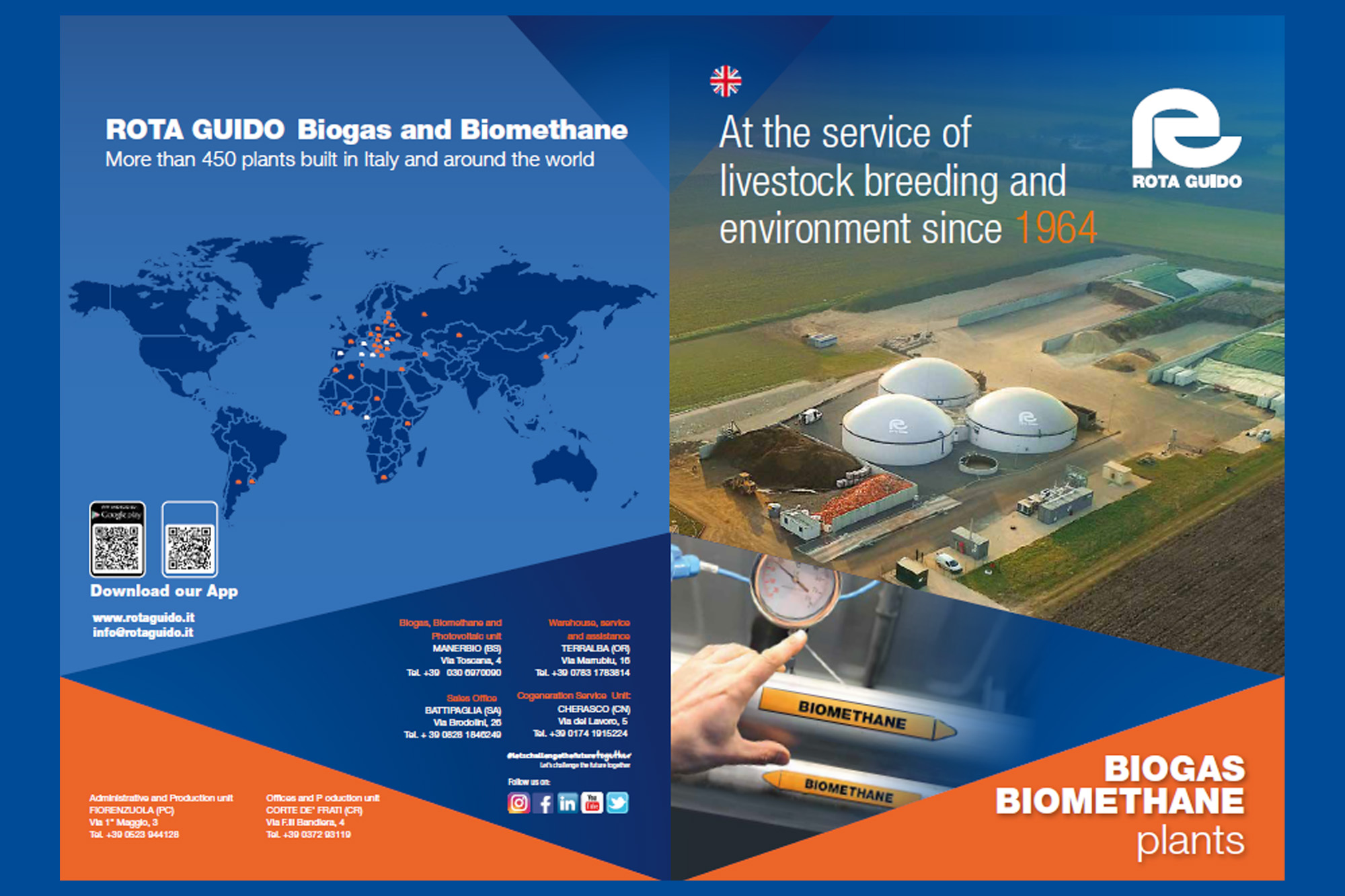
Download our app
ACCESS THE FULL ROTA GUIDO SOLUTIONS CATALOGUE
Here you’ll find news, in-depth articles and full descriptions of Rota Guido’s main products.


Discover our success cases
Innovative projects in Italy and abroad: large and small farms, solutions for automated systems, biomethane and biogas plants, photovoltaic systems, refurbishments, and technologies for nitrogen and water recovery.