SLURRY TREATMENT
Livestock slurry conveyance, treatment, and management systems
Management and treatment of livestock waste for efficient and sustainable agriculture: complete solutions for conveyance, treatment, and storage of slurry, designed to integrate it into the farm/agronomic fertilization plan, ensuring correct dosage and distribution at the most appropriate times.
AUTOMATIC CLEANING SYSTEMS
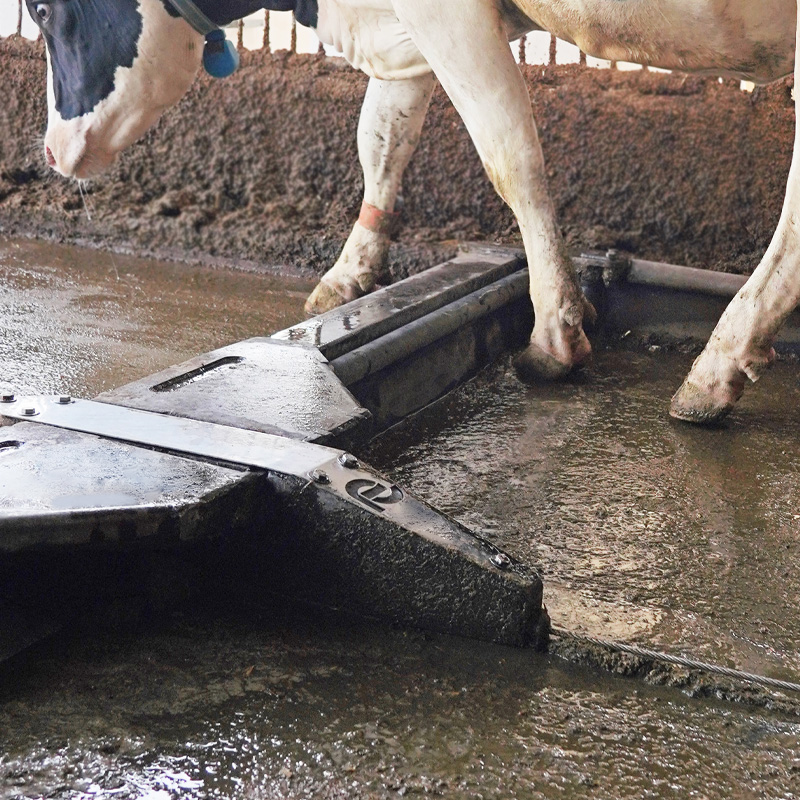
Scrapers
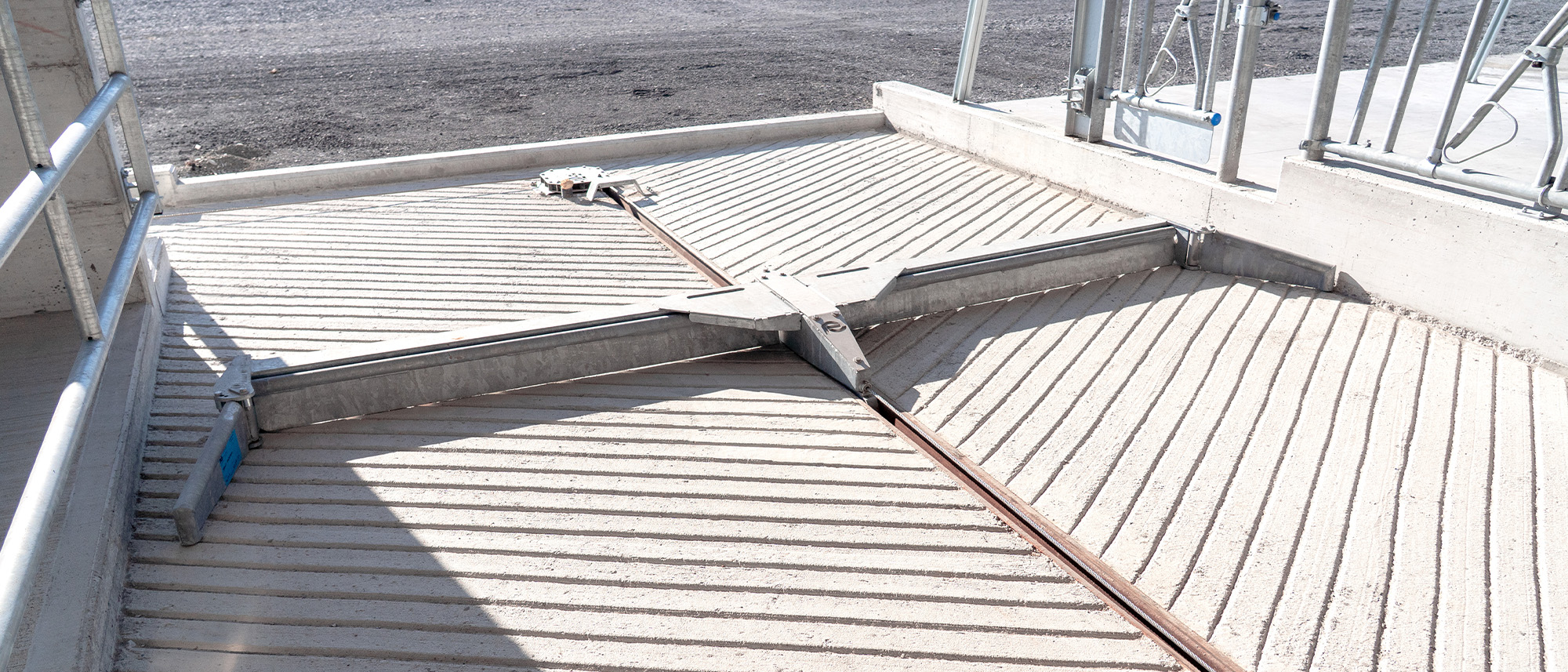
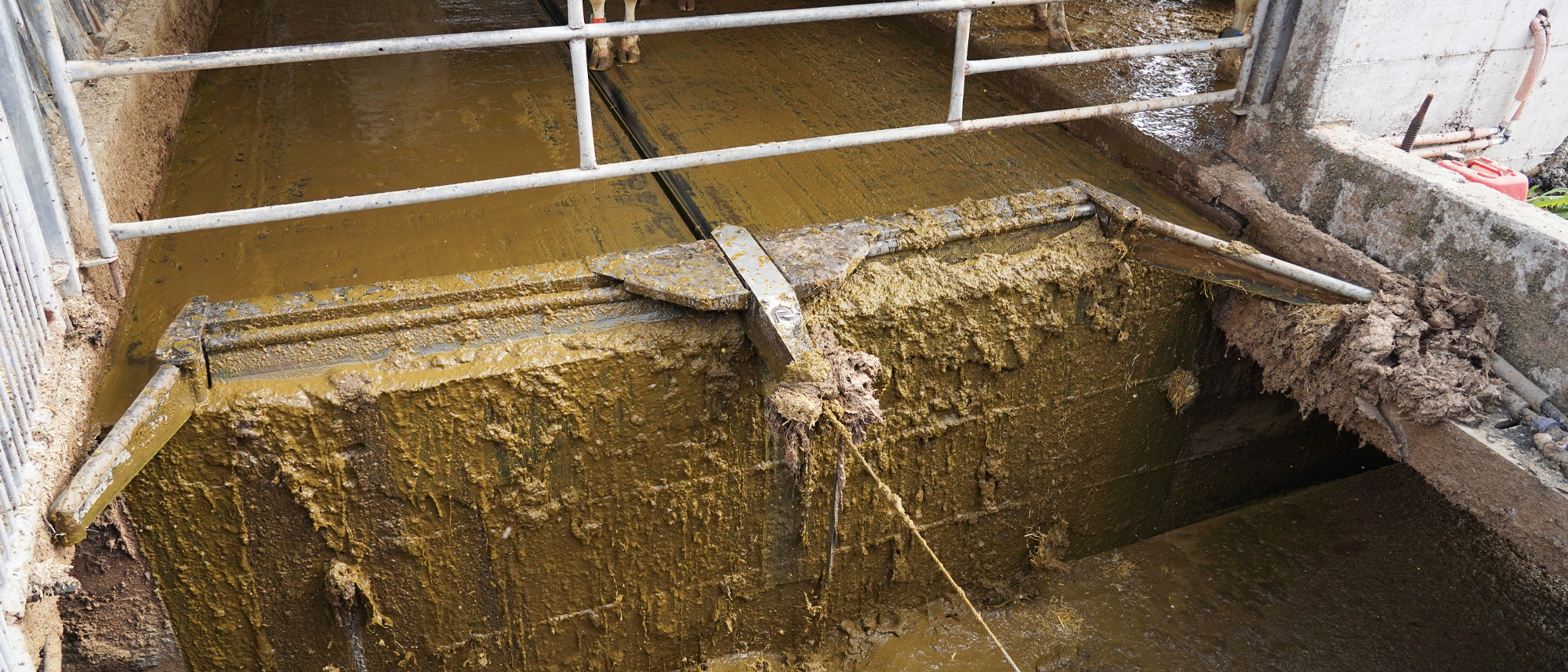
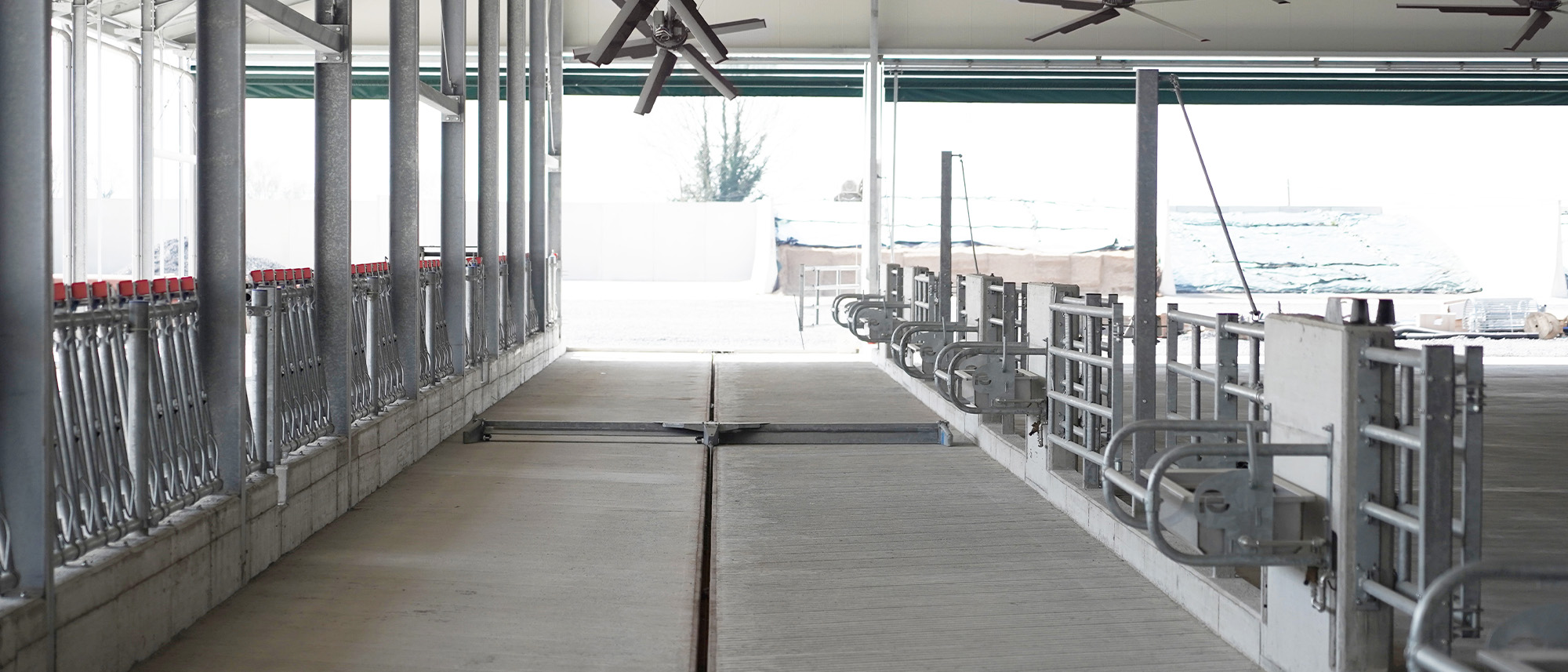
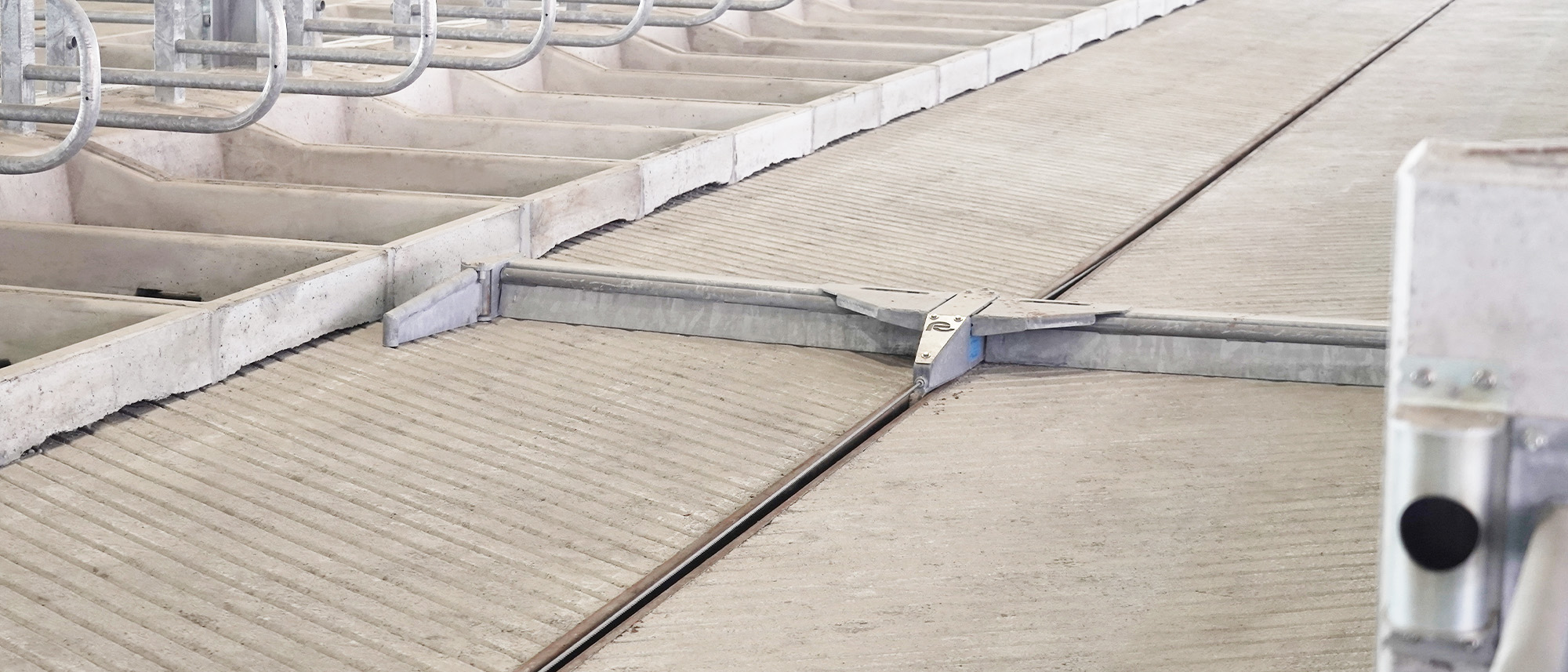
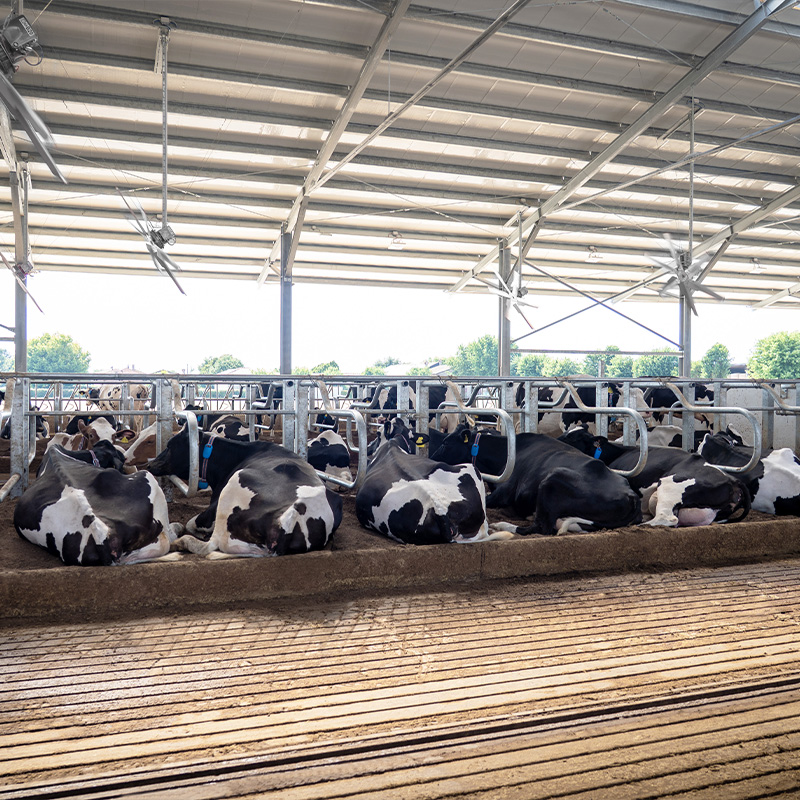
Designed to keep lanes and stable areas consistently clean, ensuring environmental hygiene, animal comfort, and reduced labor.
The various solutions available are suitable for solid (including rubberized) or slatted floors, offering reliability, low fuel consumption, and minimal maintenance.
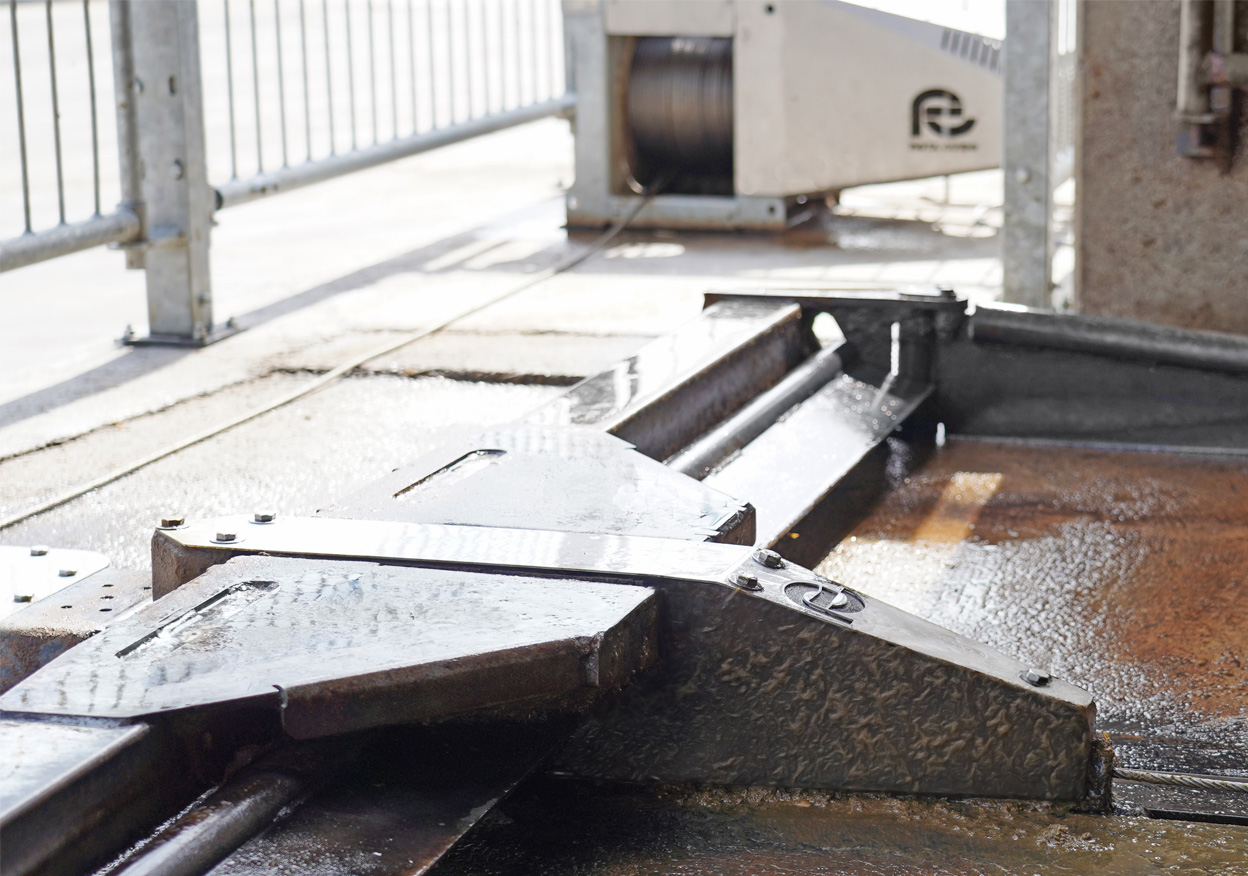
- Rigid rod scrapers: hydraulic traction, constant reciprocating motion, straight/tilt/butterfly blades with automatic reversal.
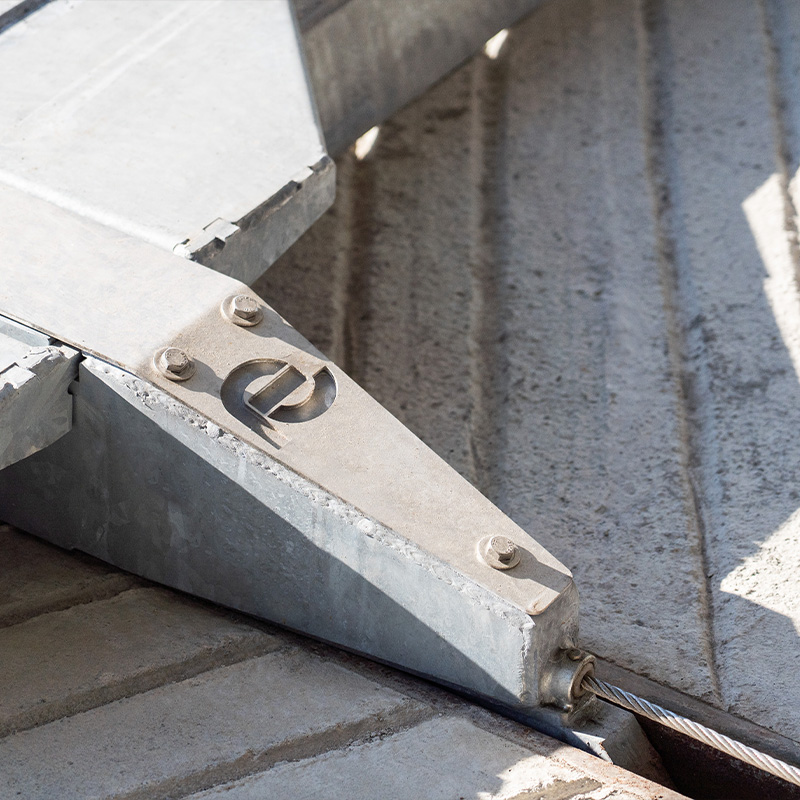
- Cable scrapers: versatile solution for simultaneously cleaning multiple lanes on solid or slatted floors.
- Chain scrapers: closed-loop chain with four idler wheels. Ideal for lanes, stalls, and outdoor paddocks.
MANURE REMOVAL
Advanced manure removal systems
Systems designed to remove manure from gutters and stalls frequently and effectively, without dilution and minimizing labor.
The following are available:
- Reciprocating systems for 50, 70, and 100 cm gutters with mechanical or hydraulic drive units,
- Box elevators, 180° rotatable elevators, and 360° rotating elevators for accumulation in the stalls.
- Vertical and horizontal balers for forming piles in fixed or free-standing stalls: the former for short distances, the latter more powerful for storage at a distance or on multiple levels.
CENTRALIZATION
Technologies for wastewater centralization
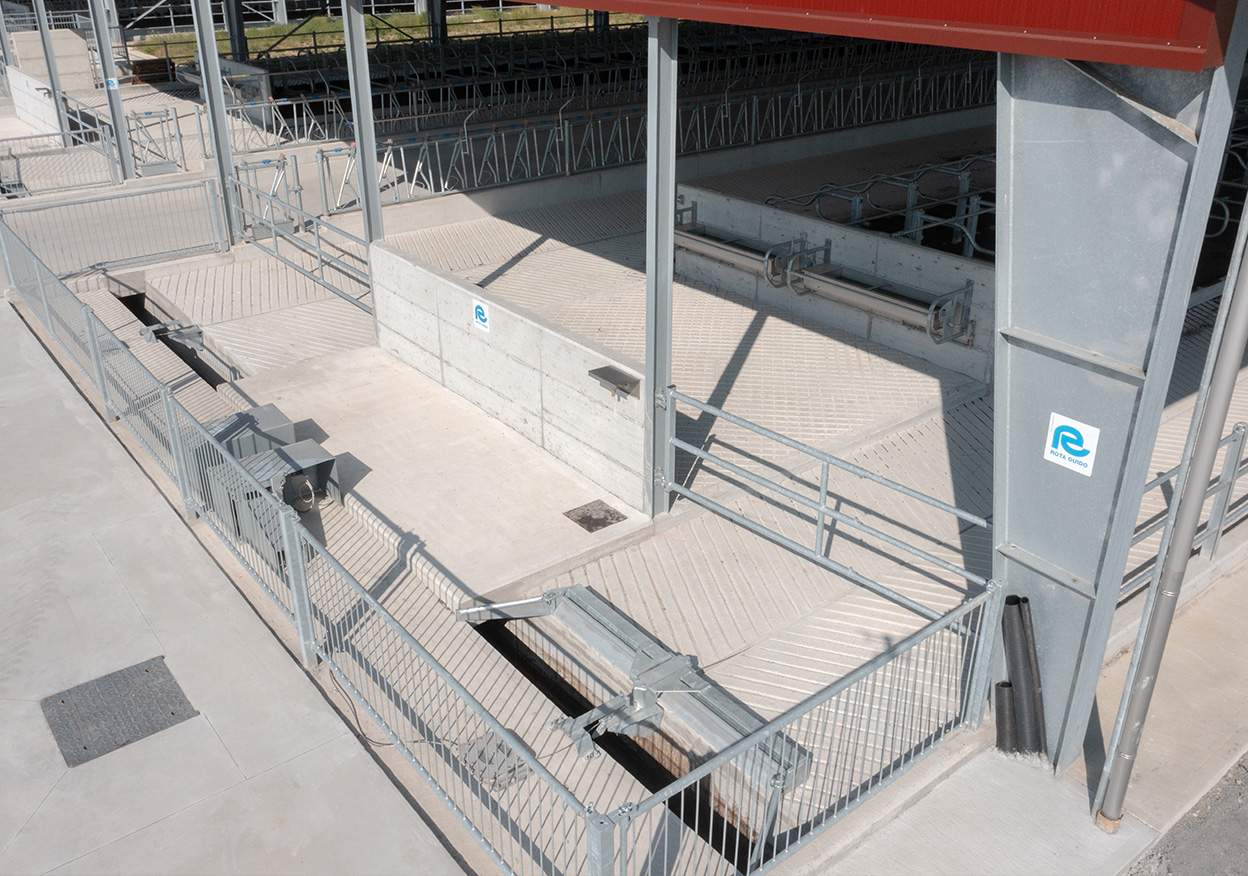
Systems for conveying livestock waste to the centralization pre-tank, the starting point for subsequent treatments. The alternating mechanical conveyor belt, composed of a rigid rod with rungs and steel blades operated by a hydraulic unit, transfers the waste into a 70 cm channel toward the collection tank.
Folding platforms allow access to the lanes for service and maintenance vehicles.
PUMPING AND MIXING
Integrated solutions for transfer and preliminary treatment
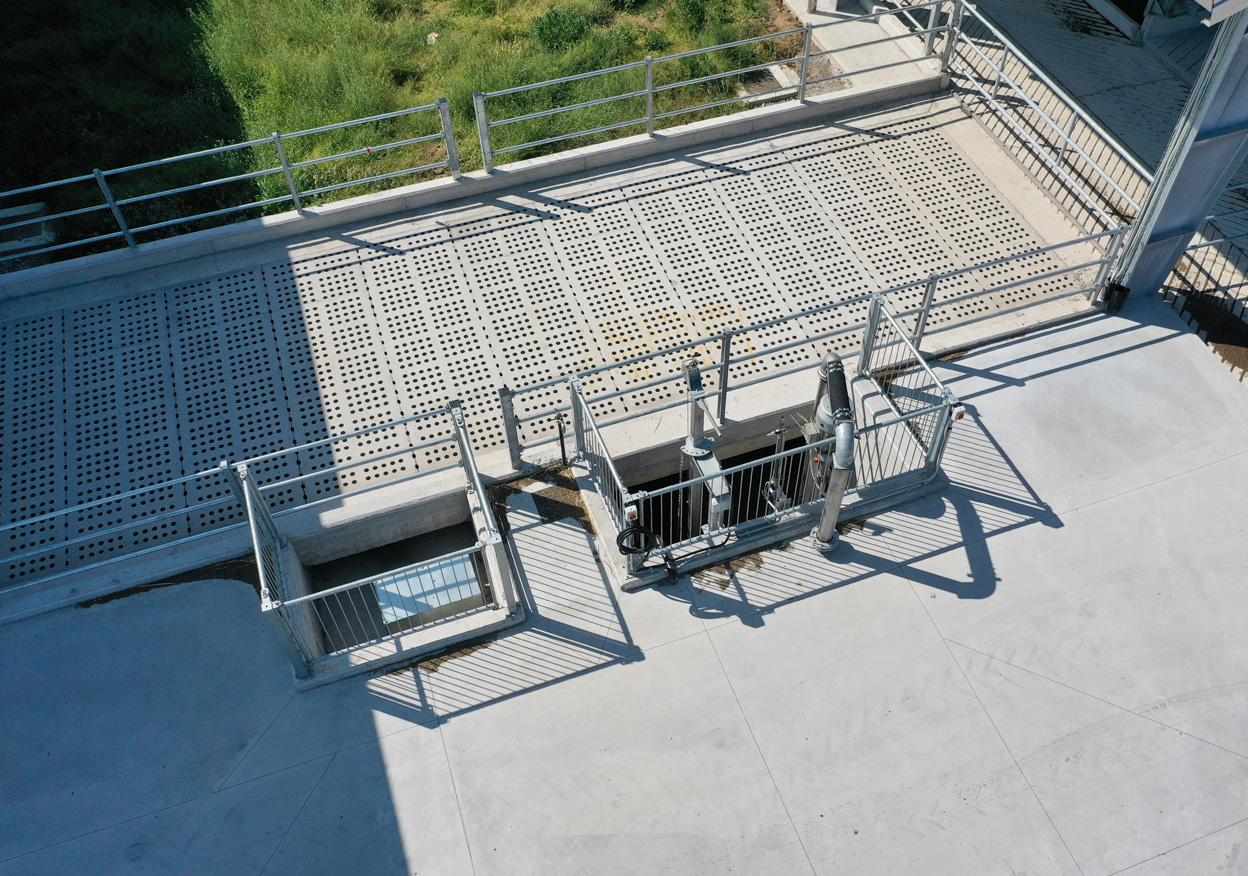
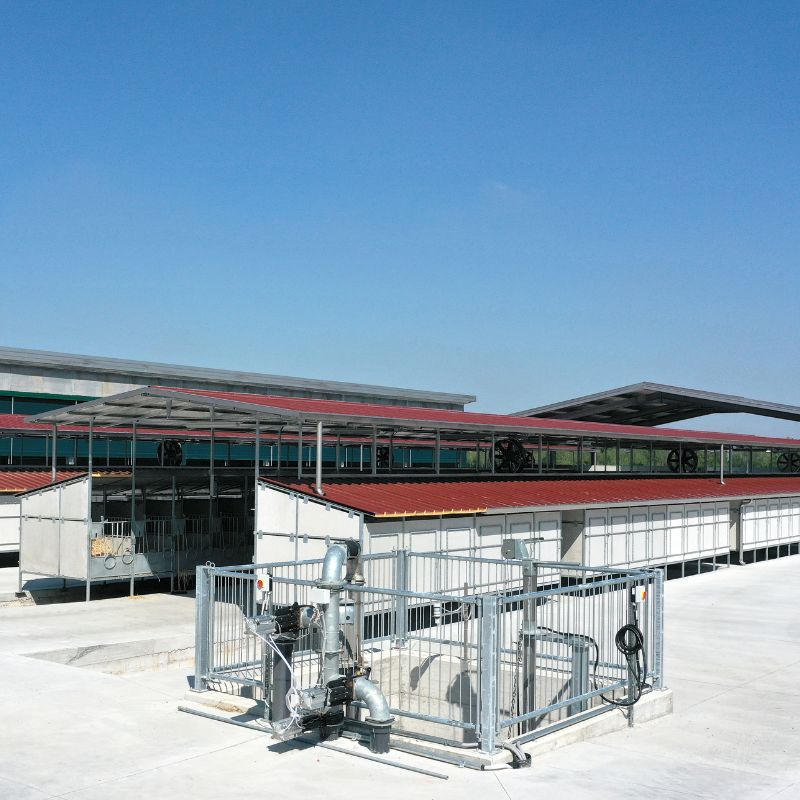
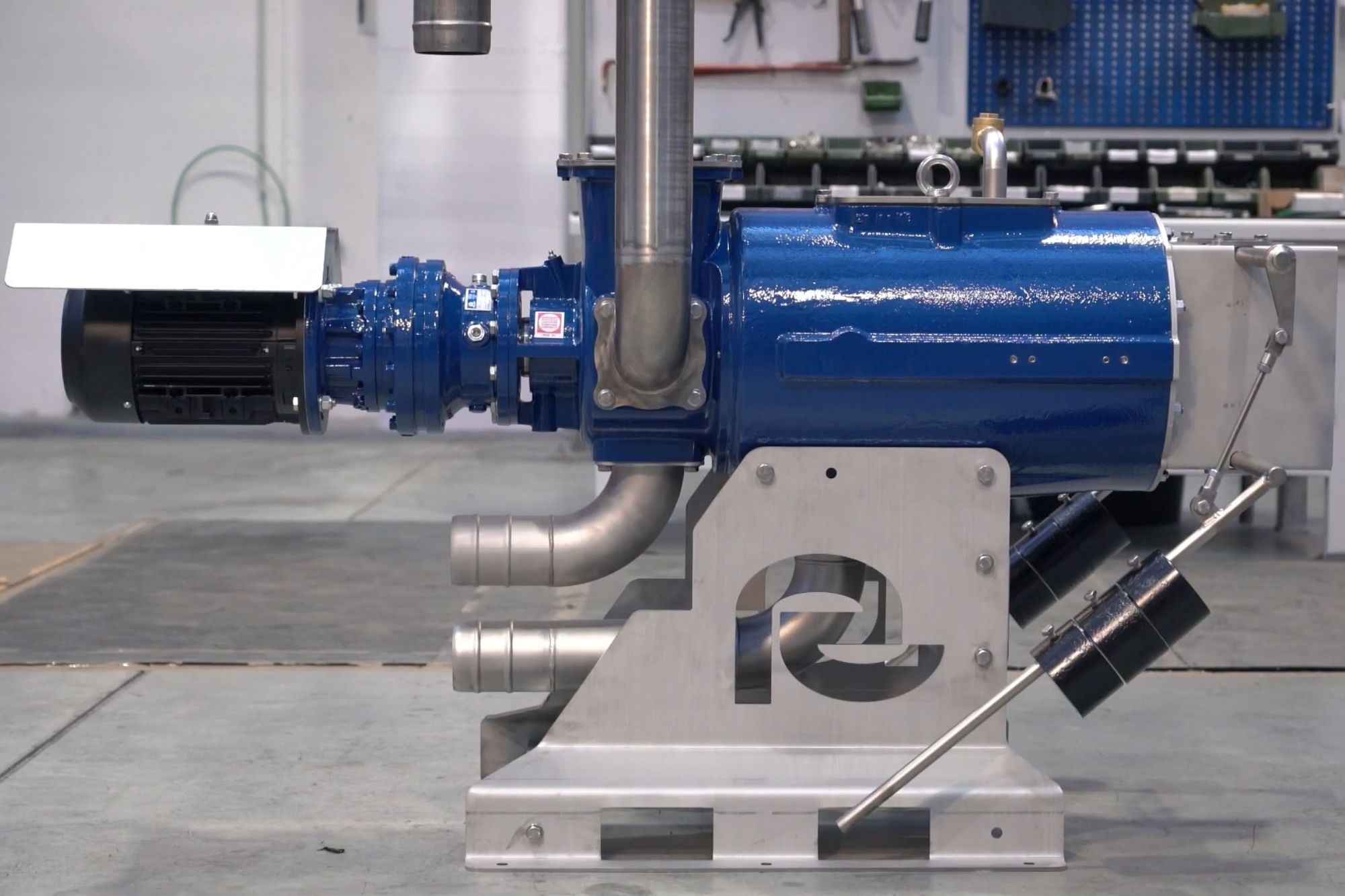
Systems dedicated to lifting, transferring, and mixing wastewater to storage tanks or subsequent treatment stages. The heart of the system is the pump, sized to ensure reliability even when using products with a high solids content and strong corrosive properties. Pumps with cardan shaft or electric motors are available, including submersible, lacerating, or vertical grinders, as well as high-capacity flushing pumps designed for installation in washing circuits for aisles and waiting areas.
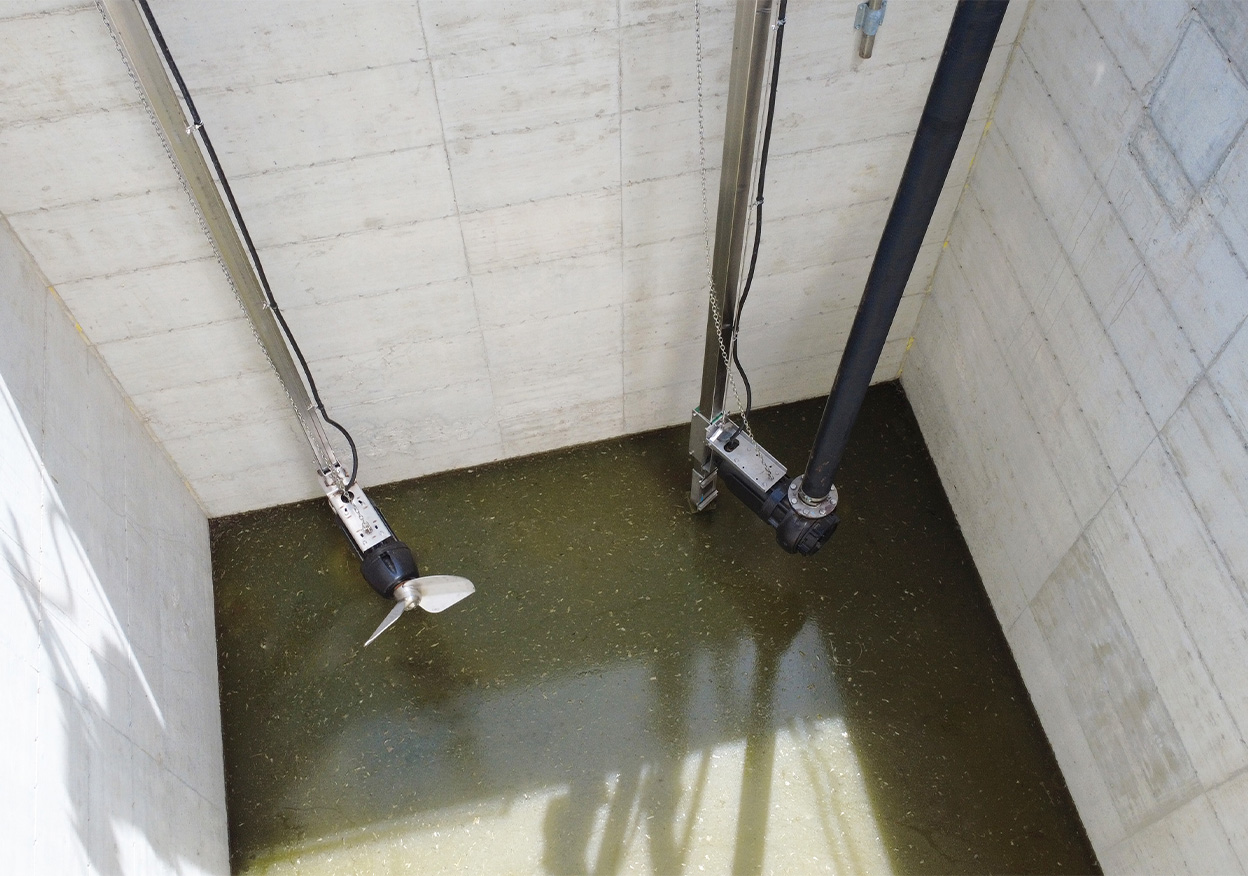
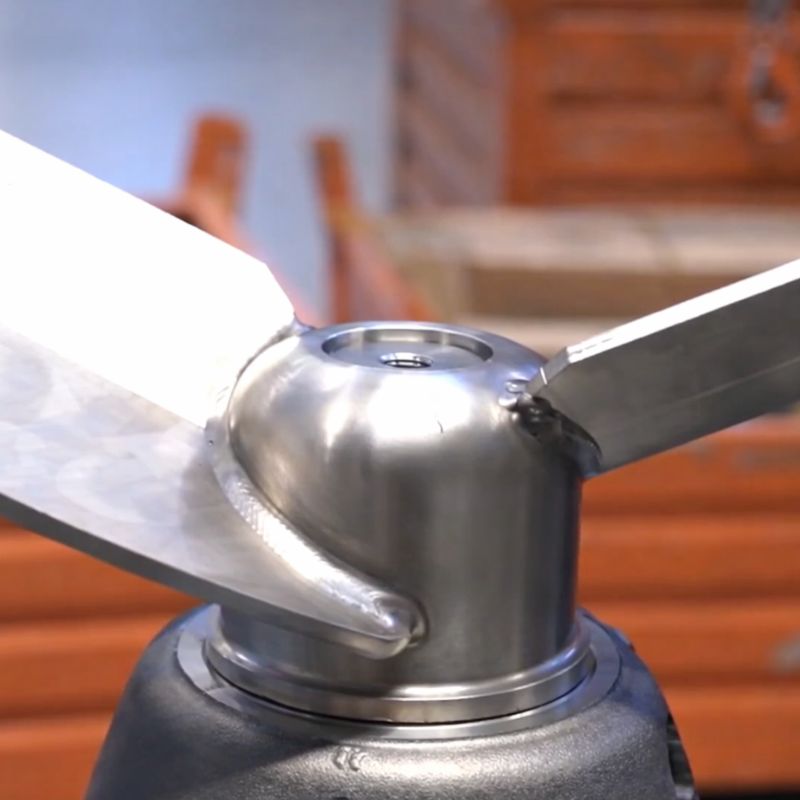
Mixing stations complete the process, ensuring essential preliminary treatment for proper agronomic use and system efficiency:
- they reduce the length of fibrous materials,
- shred solid agglomerates,
- homogenize the wastewater,
- and help prevent pipe blockages and sedimentation during storage.
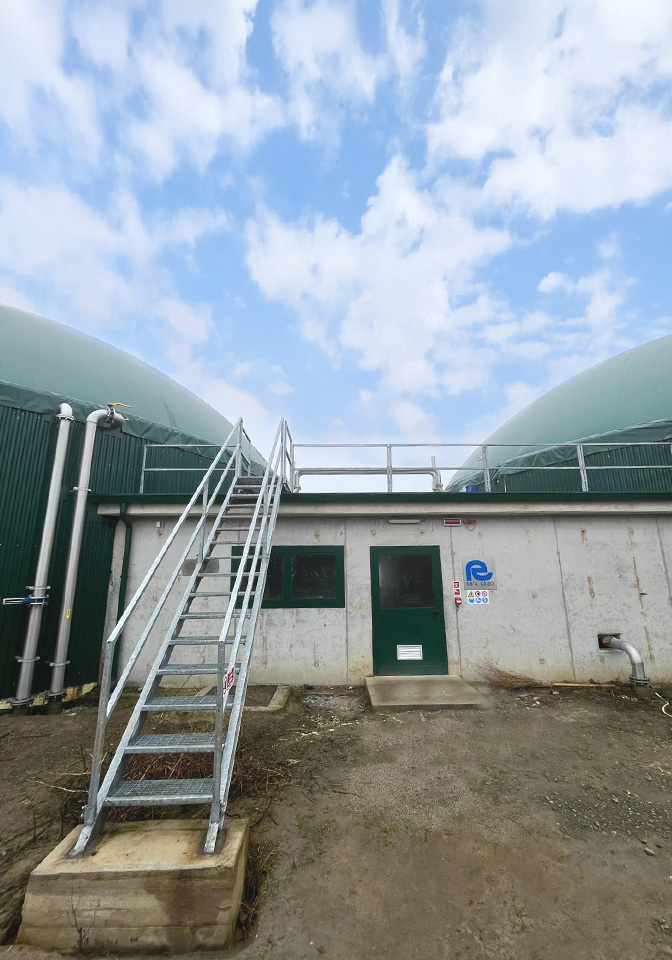
The transfer lines are equipped with ladders, balconies, walkways, and trellises for access and visual inspection, made of hot-dip galvanized or stainless steel, available in both standard and custom-designed versions.
Cardan-shaft mixers
For above-ground basins and underground pits.
Electric mixers under gratings
For pits under gratings.
Slalom-type mixers
Cardan-shaft mixers for extended channels under gratings.
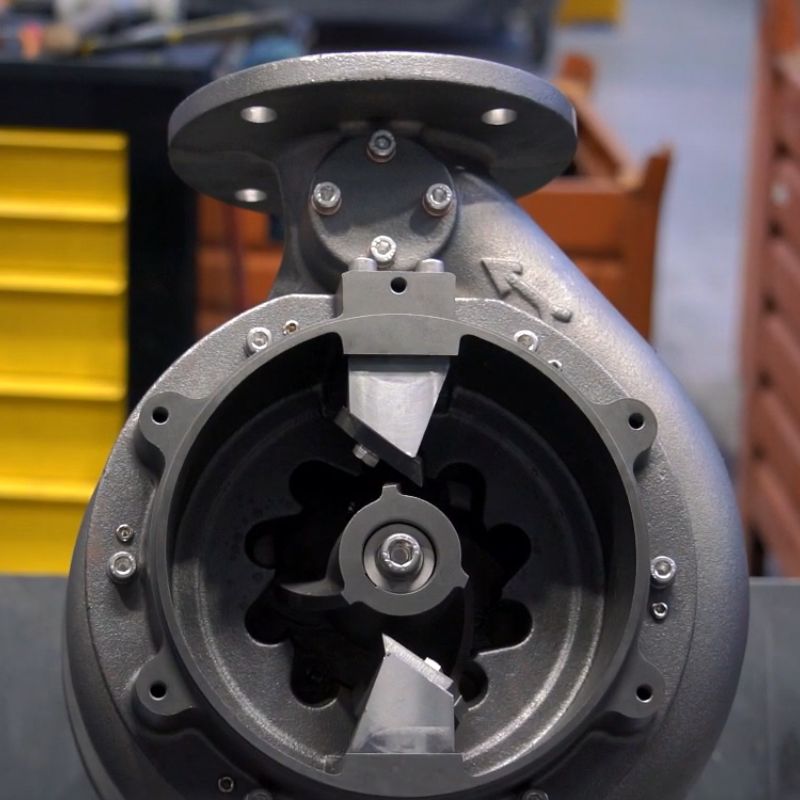
Agitator-grinders
External or submersible electric motor, also for fixed automatic systems.
SOLID-LIQUID SEPARATION
Advanced solutions for wastewater separation
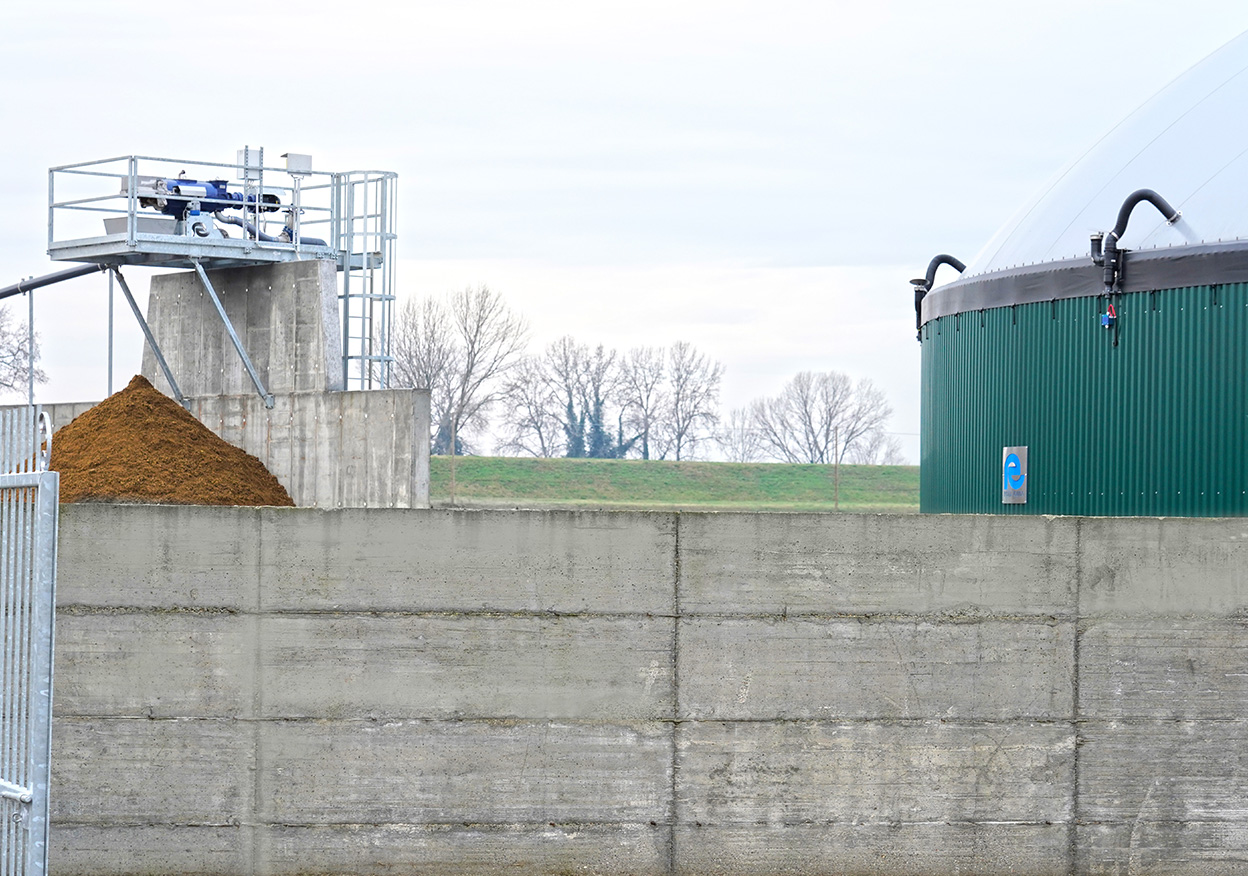
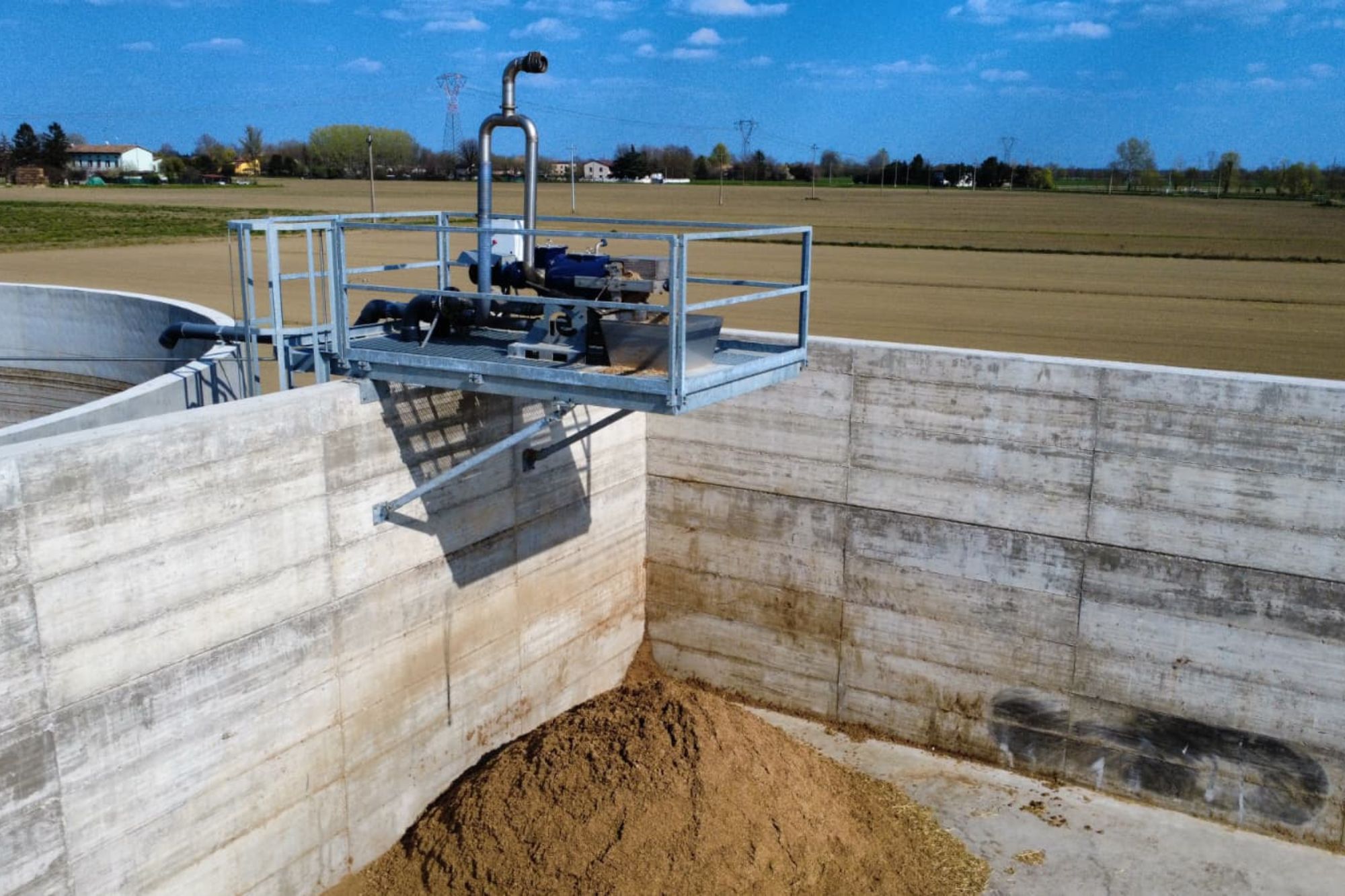
Solid-liquid separation produces two fractions: a solid fraction that can be shoveled and stacked, and a liquid fraction that is easier to handle. The liquid fraction is characterized by:
- reduction in blockages,
- improved fluidity for pumping and mixing,
- lower nitrogen and phosphorus content,
- reduction in odors and ammonia emissions,
- smaller storage volume, and the possibility of agronomic use or composting of the solid fraction.
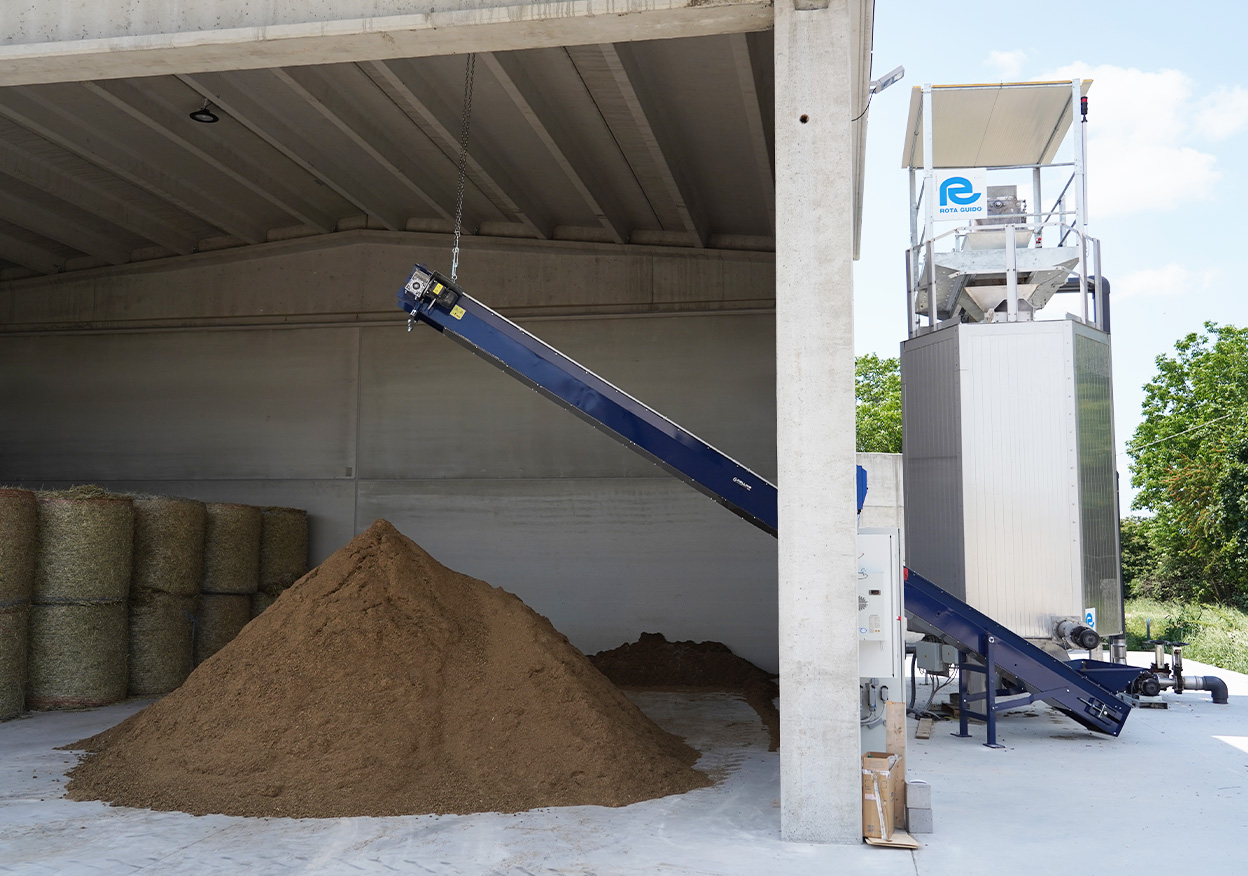
ROTA separators guarantee high production, maximum reliability, and excellent separation efficiency, without requiring special maintenance. They can be truck-mounted for use on multiple farms, making them ideal for small farms as well.
FILLING BED QUARTERS WITH A HYGIENIZED MIXTURE
The secret to efficient bedding
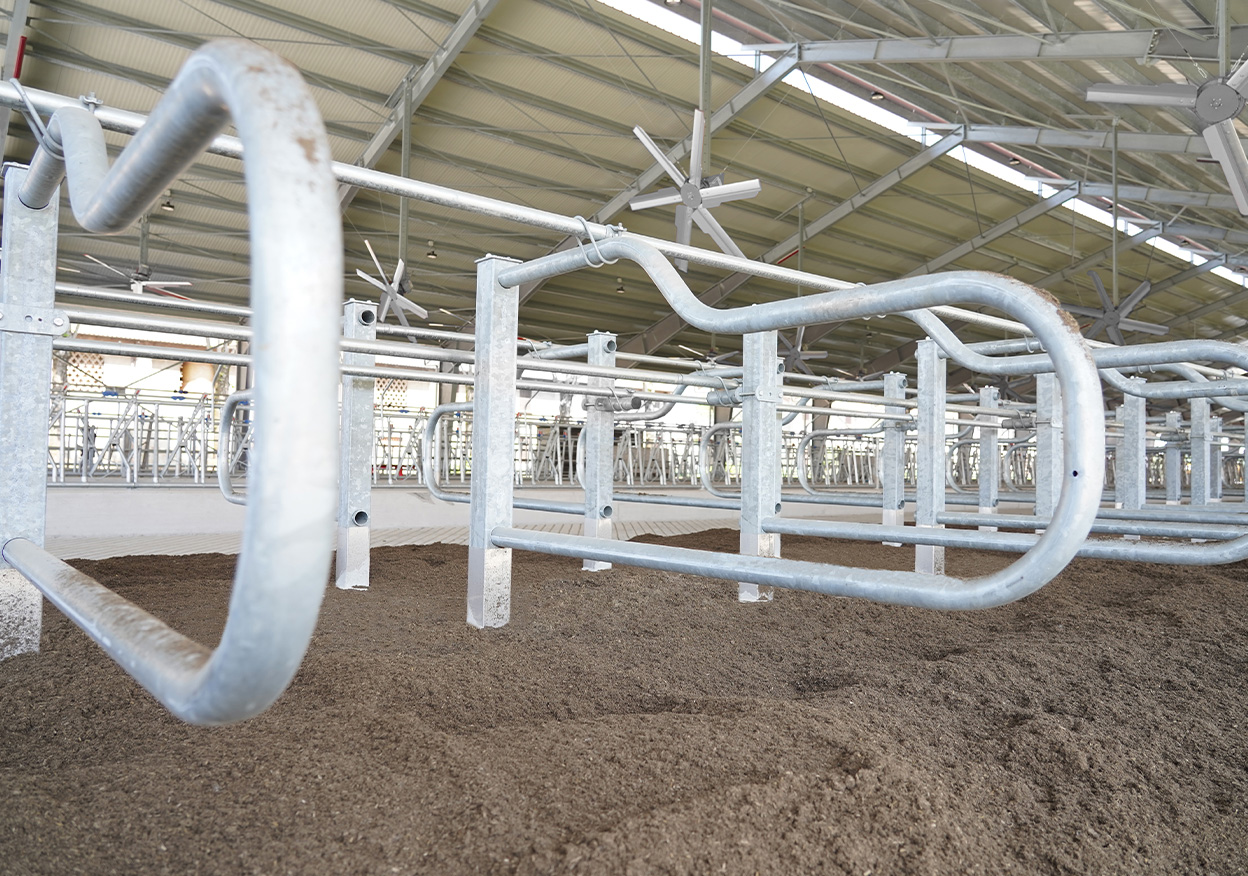
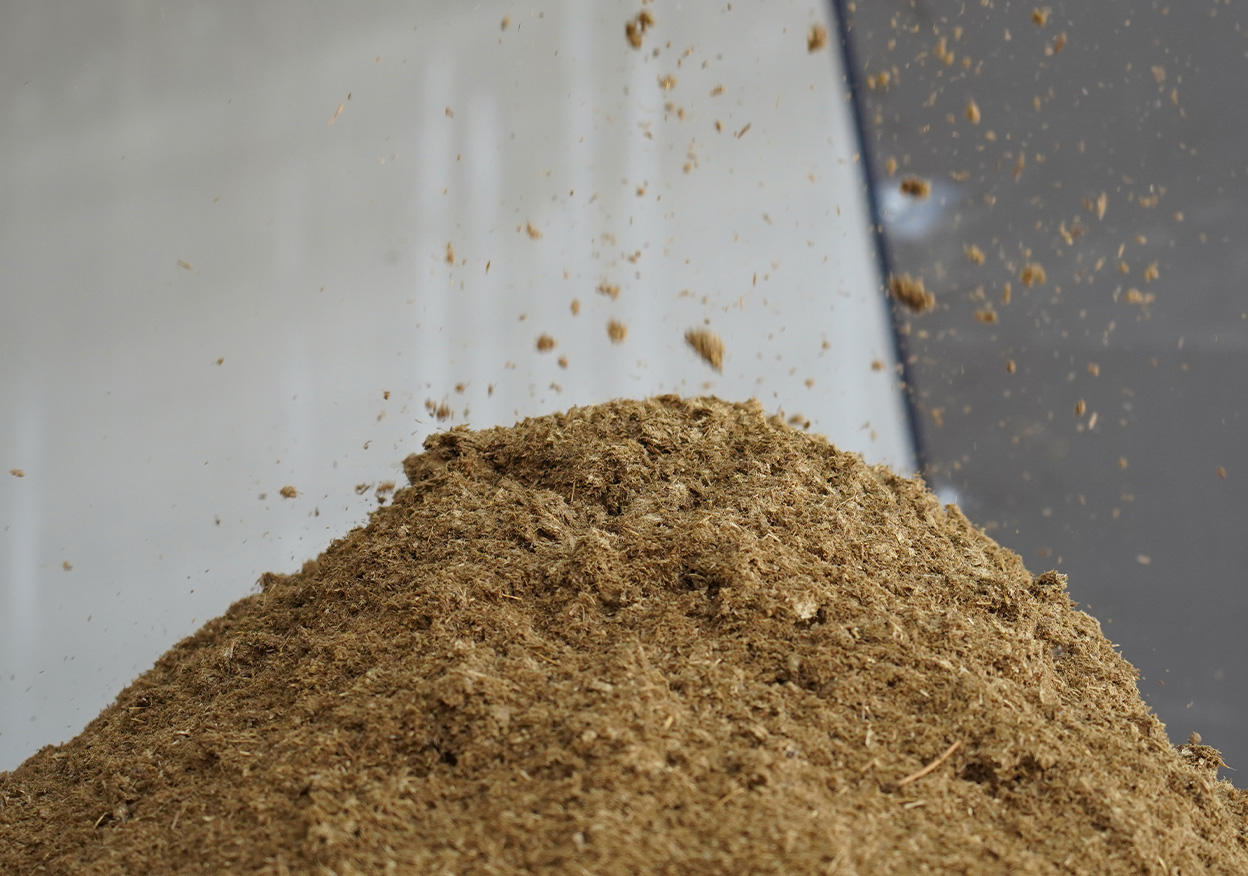
The Rota Guido approach leverages a resource already present on the farm: solid waste. Through dedicated technical consulting, it optimizes its use in filling pit cubicles, improving their structure, stability, and behavior over time. The characteristics of the material and the barn environment—humidity, texture, drainage capacity, and distribution methods—are analyzed to determine the most effective solution for the herd. Supplementing with an alkaline product (pH > 12) results in a drier, more uniform, and more stable filling, improving cubicle hygiene.
This translates into concrete benefits:
- Reduced risk of mastitis
- Reduction of somatic cell counts
- Fewer respiratory problems
- Reduced veterinary costs.
OXYGENATION AND DEODORATION
Biostabilization for an odorless product
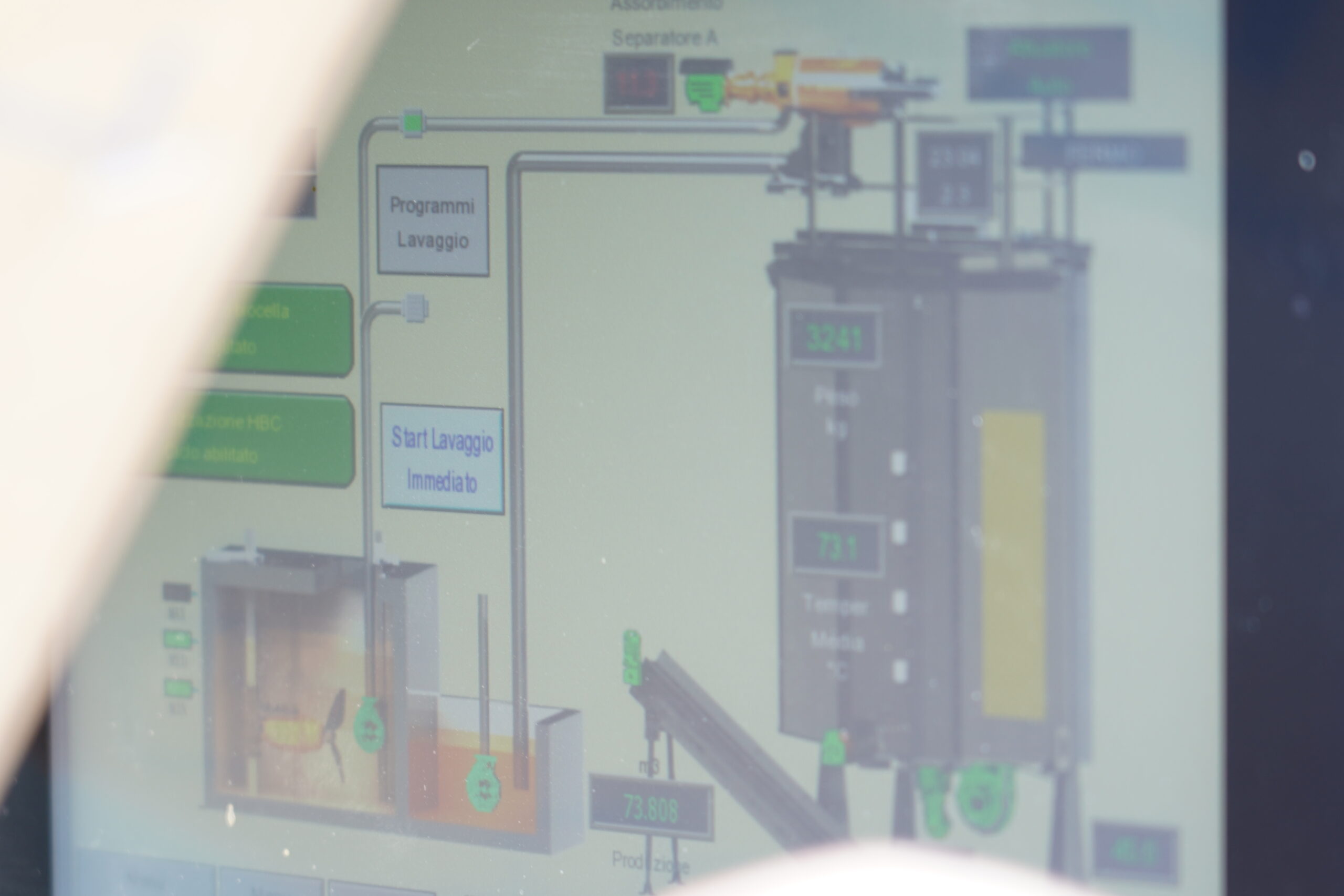
Unpleasant odors in sewage arise from the rapid fermentation and degradation processes of the most easily putrescible organic fraction by microorganisms. To prevent their formation, it is necessary to accelerate the breakdown of this organic fraction, resulting in a product in which only slow processes remain active. This minimizes fermentation activity and prevents the release of malodorous compounds. Sewage stabilization can be achieved with aerobic or anaerobic treatments.
RECIRCULATION AND FLUSHING
Recirculation Washing Systems
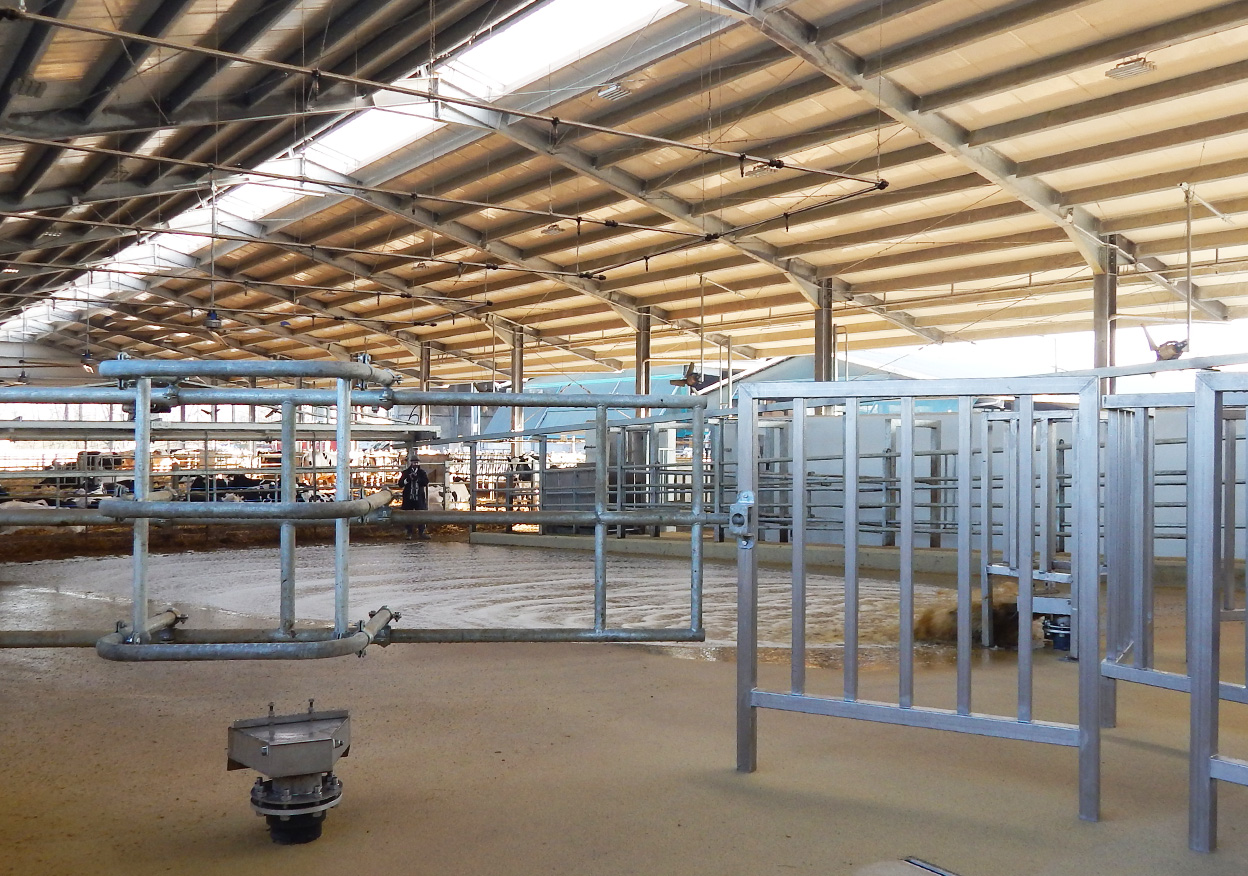
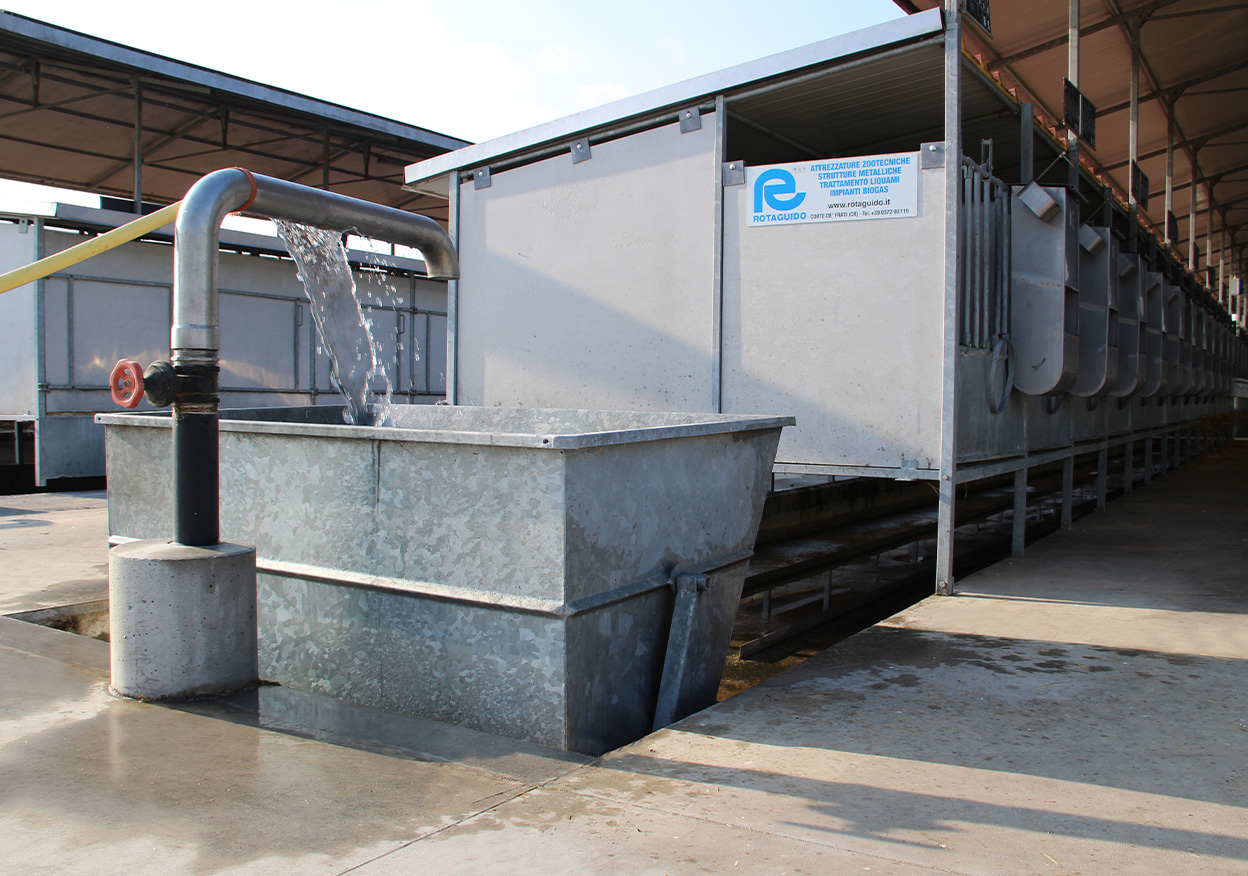
Automatic washing systems for feed and rest lanes, available with a booster pump or water tower. The system uses pop-off valves for controlled wastewater discharge, ensuring effective cleaning and reduced labor.
STORAGE BASINS
Safe and scheduled management of livestock waste
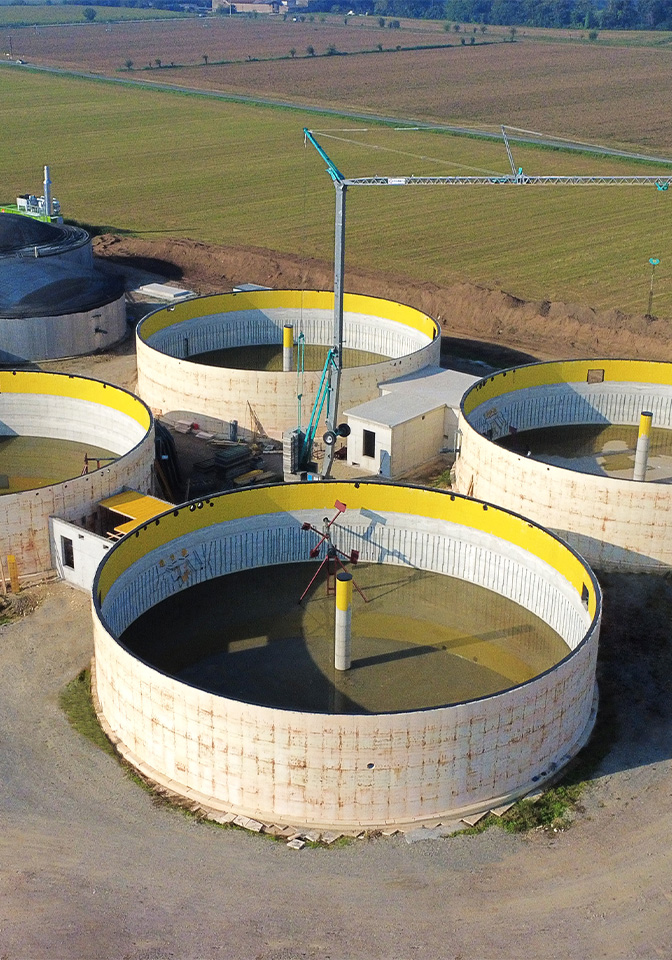
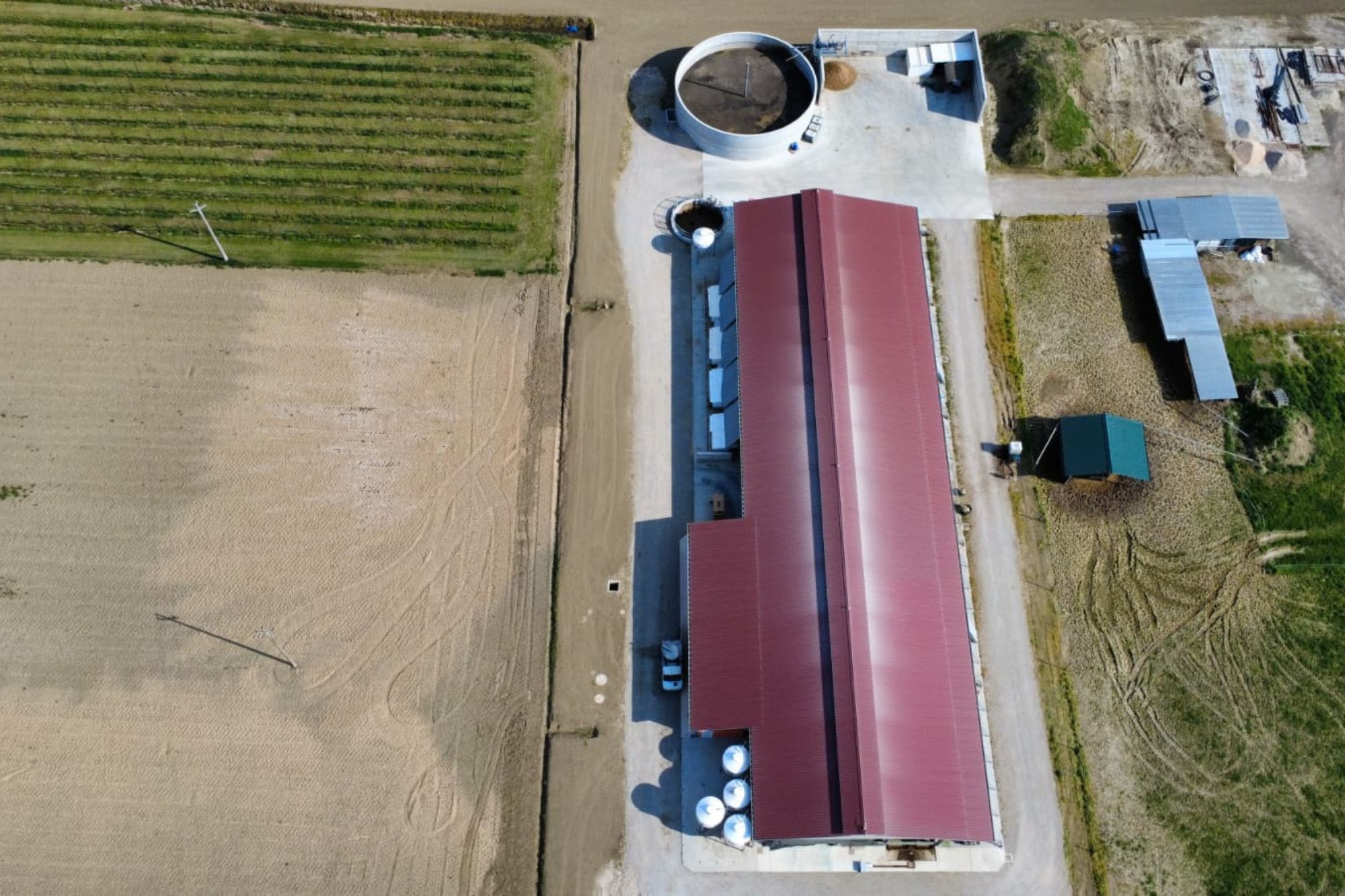
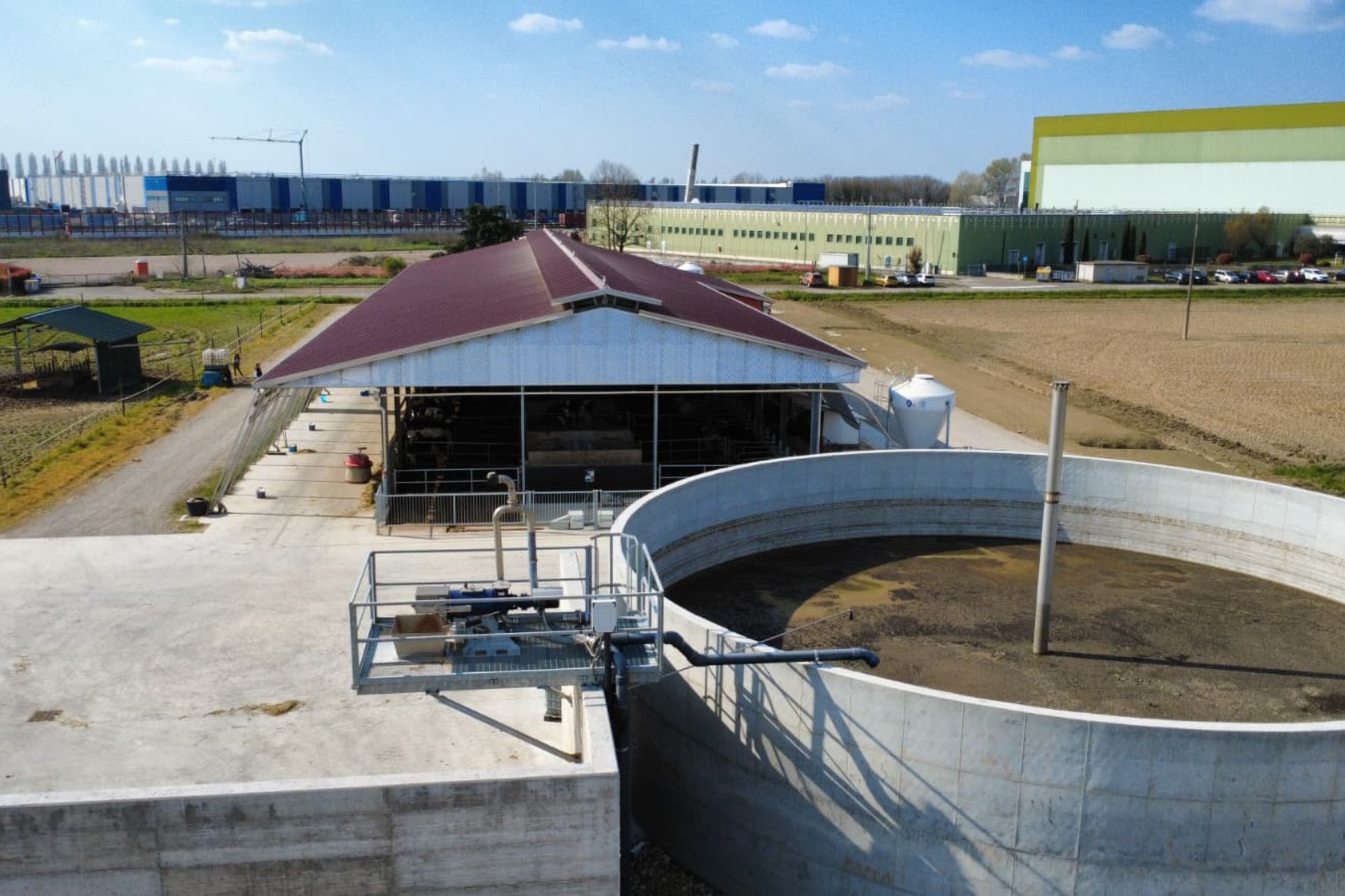
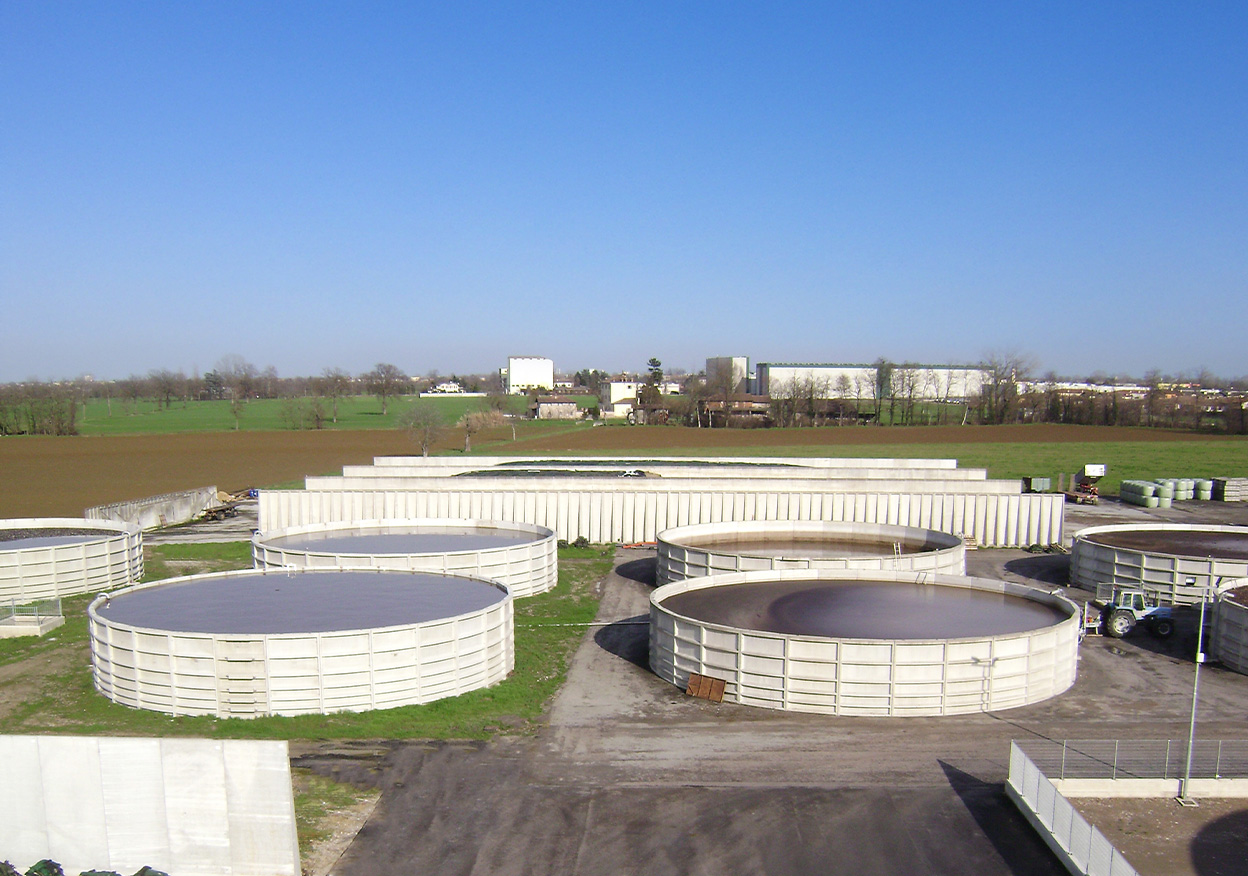
For proper agronomic management of livestock waste, it is essential to have basins sized and equipped for safe conveyance, loading, mixing, and emptying, with possible covers in the most sensitive areas.
The gate valves, available in wall-mounted, safety, and float valve versions, allow for easy collection, even in the presence of an external drainage pit, ensuring scheduled distribution that complies with the farm’s fertilization plan.
COMPOSTING
From waste material to stable and manageable compost
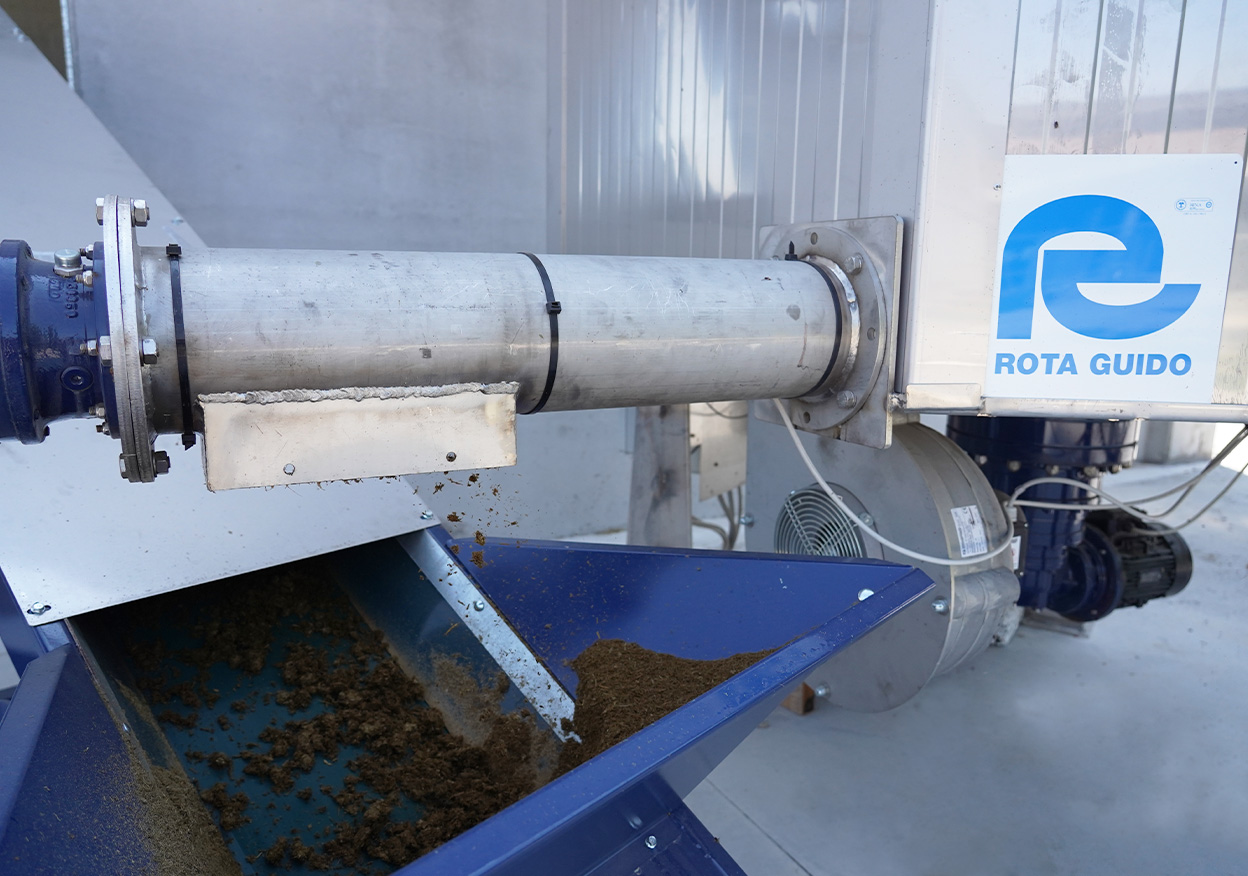
An aerobic biological process that rapidly mineralizes and humifies organic matter, producing heat and a soil-improving compost with variable characteristics based on its stage of maturation.
It is the ideal solution for areas with high manure loads, as it generates a more stable, easily manageable, and transportable material.
The systems can be built in a galvanized steel greenhouse with a plastic cover, equipped with a horizontal pit reactor and an automated turner, or on large open areas with a shredding-windrowing wagon. The process is completed with screening, pelleting, and bagging of the final compost.
PIG MANURE
Waste Disposal
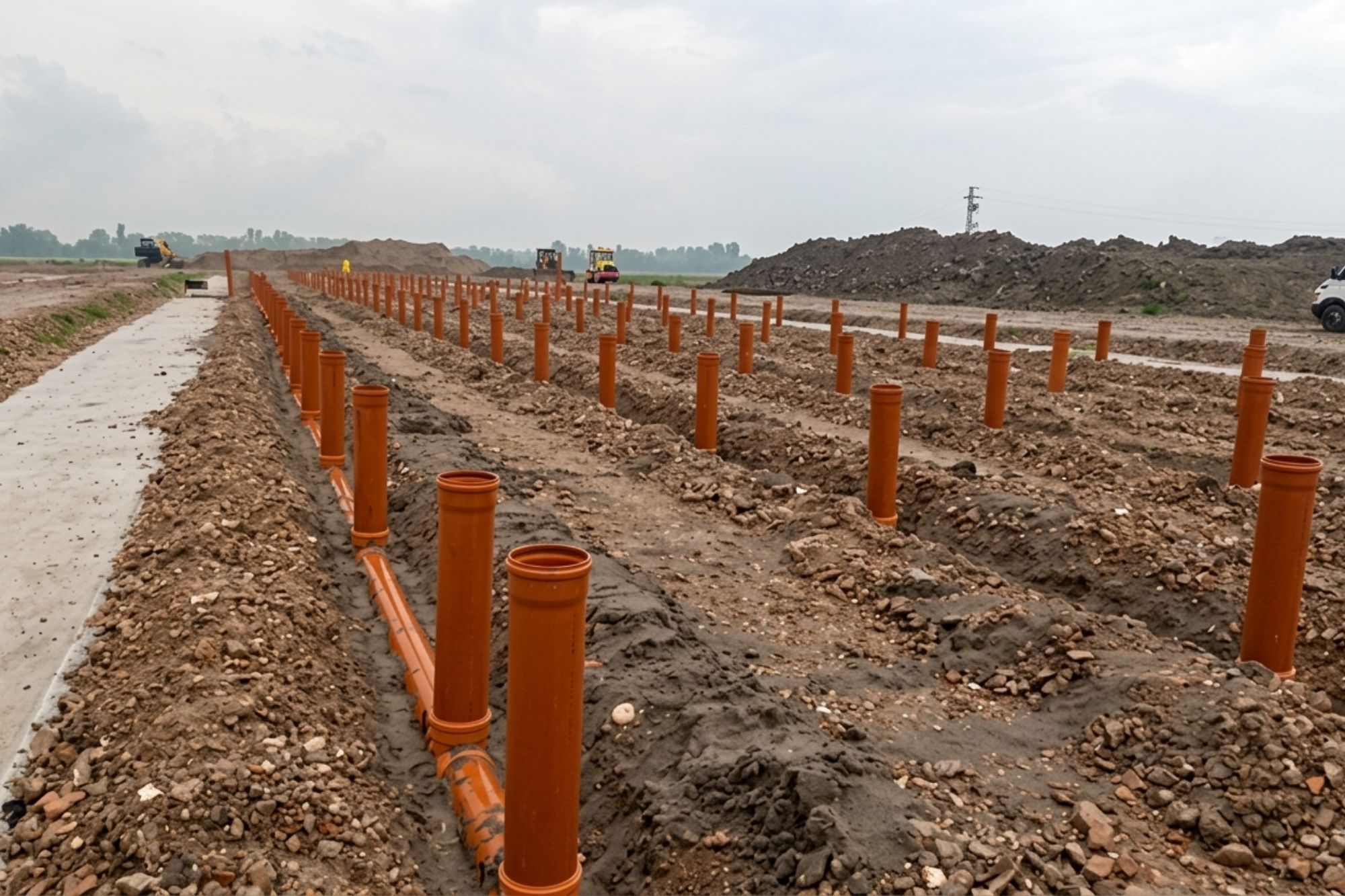
The waste disposal technique proposed by Rota Guido is the vacuum system (BAT XX), commonly referred to as a vacuum. It is an economical, intuitive, and simple to operate solution. For the system to be recognized as a BAT technique during the authorization phase, it must meet certain fundamental requirements. Specifically, the sizing must be consistent with the type of housing served, ensuring valve openings every 7 to 10 days.
This level of effectiveness is achieved by designing a carefully calculated, distributed drainage network, avoiding configurations with single or unevenly distributed discharge points. Over thirty years of consolidated experience and ongoing dialogue with the relevant authorities allow Rota Guido to develop specific solutions for each context, designed from the outset to comply with authorization requirements.
ADVICE
Request a consultation
Please do not hesitate to contact us.
Rota Guido’s technical and sales team is at your complete disposal for any enquiries or information you may require.
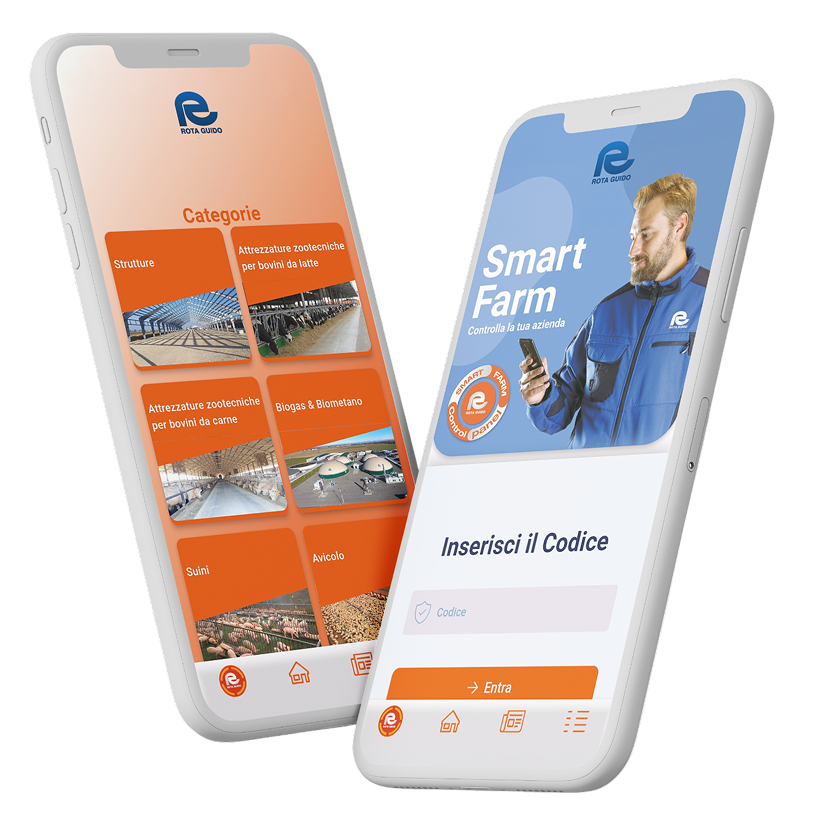
Download our app
ACCESS THE FULL ROTA GUIDO SOLUTIONS CATALOGUE
Here you’ll find news, in-depth articles and full descriptions of Rota Guido’s main products.


Discover our success cases
Innovative projects in Italy and abroad: large and small farms, solutions for automated systems, biomethane and biogas plants, photovoltaic systems, refurbishments, and technologies for nitrogen and water recovery.