The ‘toll booth’ model: a revolution in milking systems
Rota Guido offers consultancy and design services to enable farmers to review and optimise their choices, even during the operational phase. Targeted interventions allow for the reconfiguration of spaces and workflows, including the introduction of advanced solutions such as the ‘toll booth’ configuration applied to free-flow milking systems.
GUIDED TRAFFIC
Toll Booth
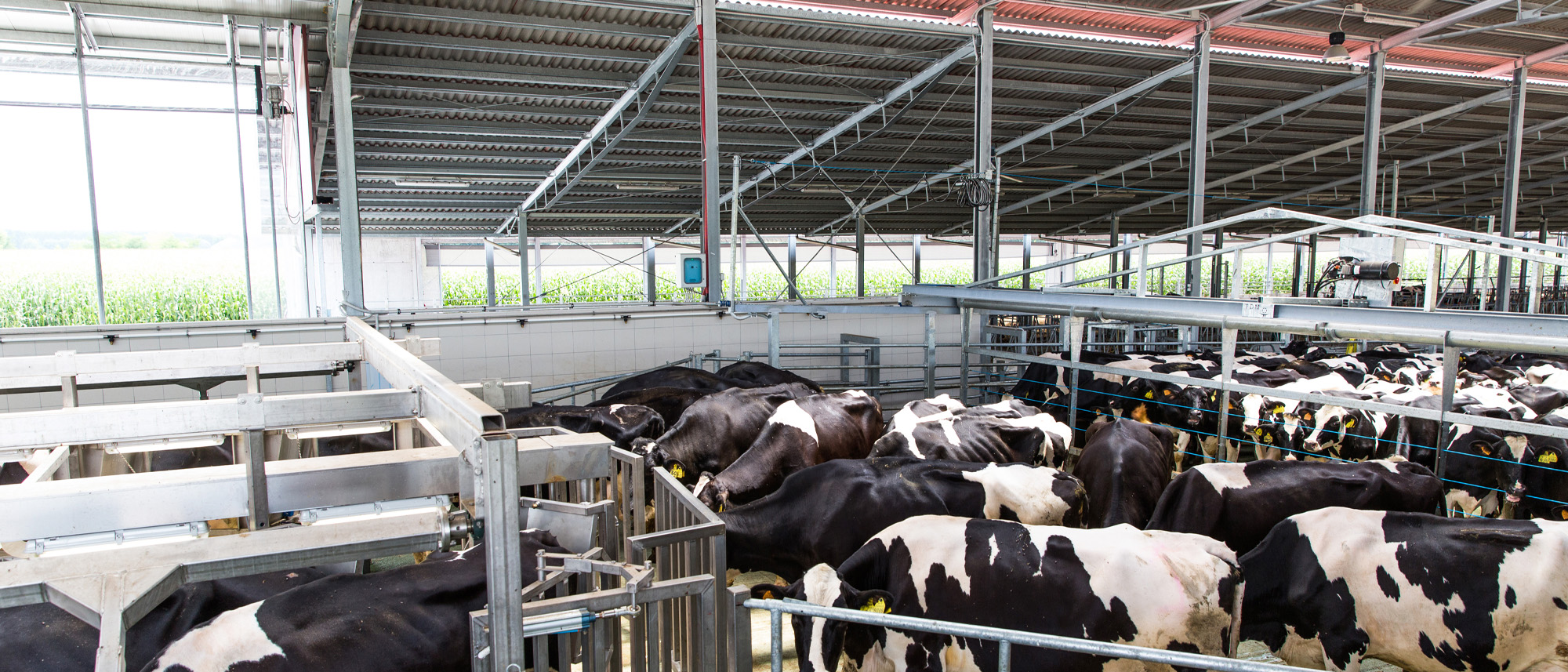
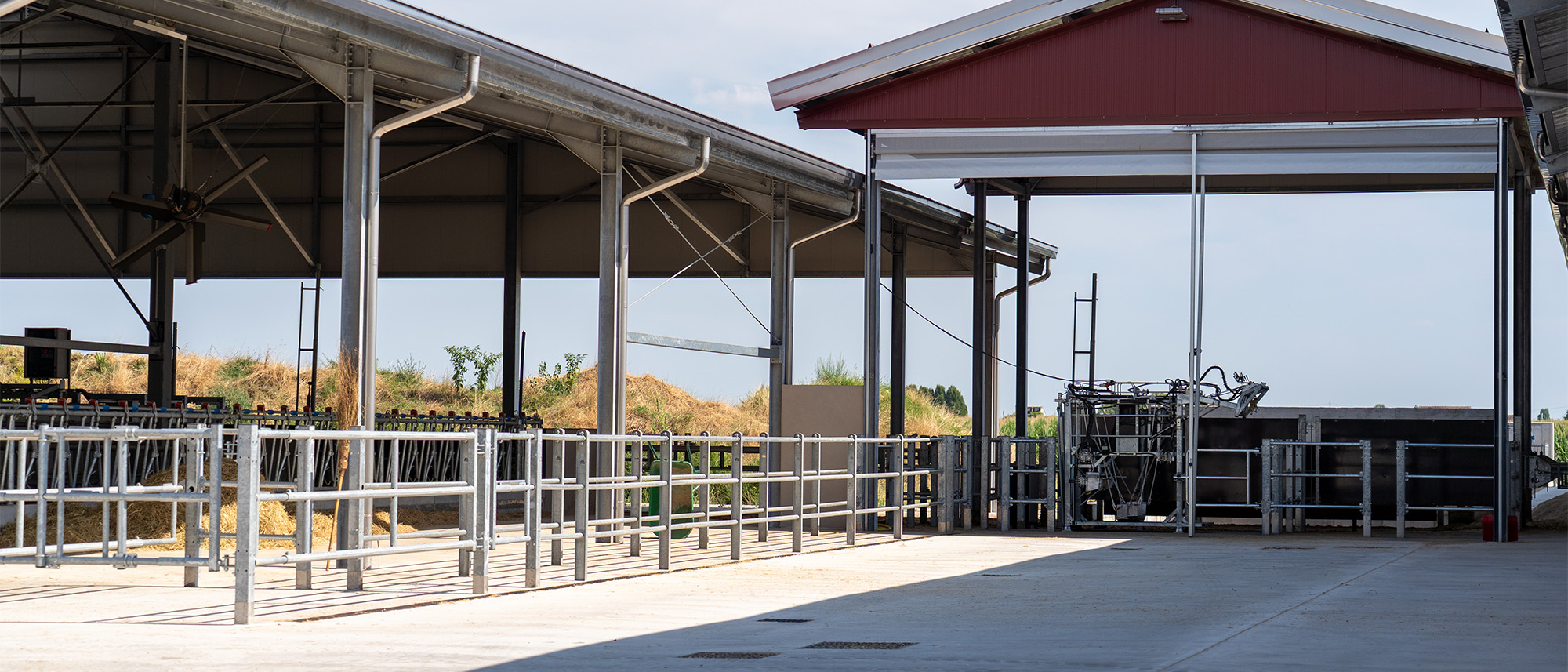
One of the key aspects in the design of barns with automated milking systems is the management of cow traffic. In free-flow systems, the animals move around independently, whereas in guided-flow systems, the flow of animals is regulated by operators and gates. In this context, the design of the spaces is crucial. Rota Guido develops solutions adaptable to various milking configurations: from robotic systems with batch milking logic, as seen on the La Ceresona and Arvedi Sant’Antonio farms, to rotary milking parlours, designed to simplify the operator’s work, as in the Campidano Agrozootecnica, Fugazza and Arvedi Casanova, right through to the milking parlours adopted at the Ferrari Ciboldi and La Gaia farms.
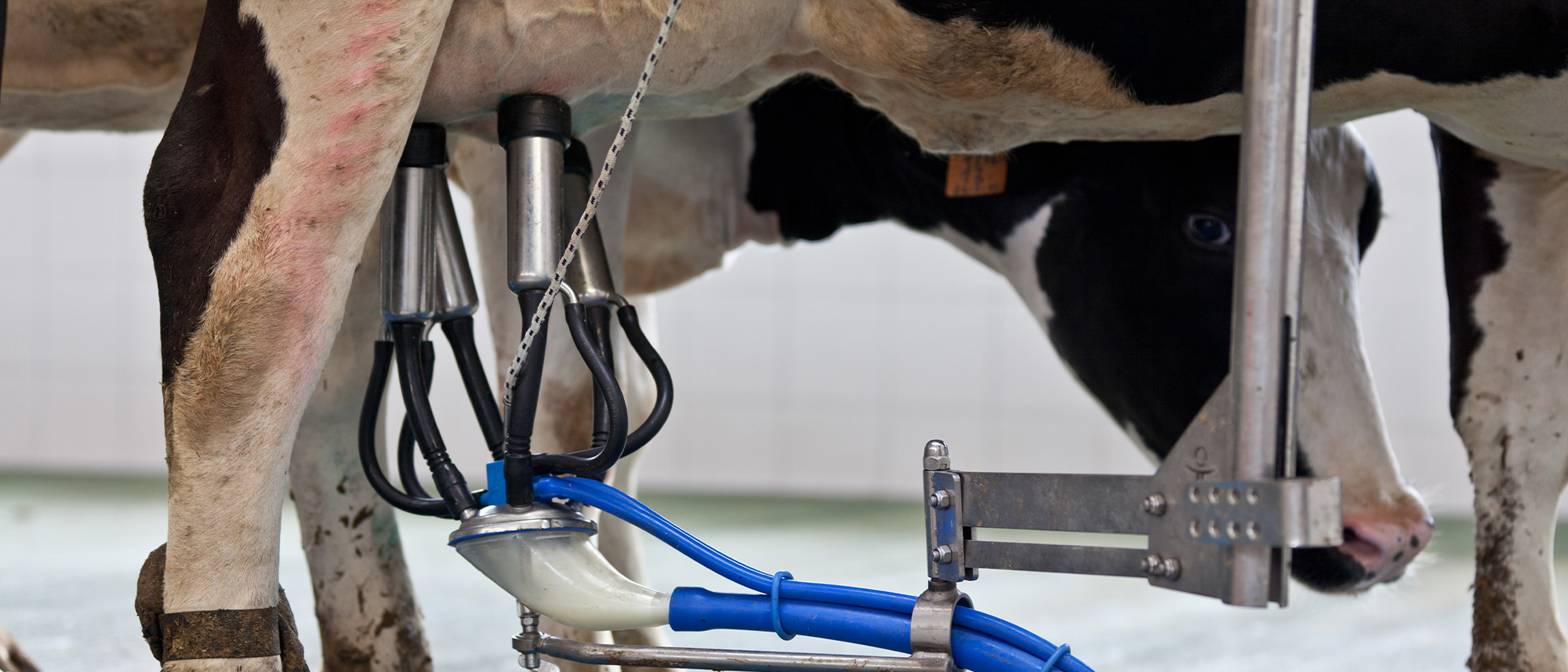
The latest developments in free-flow robotic milking systems are leading to innovative configurations, such as the ‘toll booth’ model. In this layout, the cows enter the robot from one side and exit from the other, following a fixed route. In contrast, in traditional free-flow configurations, the cows enter and exit the robot from the same side, regardless of whether they are being milked or not: an approach that guarantees greater freedom of movement, but presents certain operational challenges. Dominant cows, in fact, tend to remain in the robot area, attracted by the feed, occupying it longer than necessary and restricting access for other animals, which end up crowding into the same area. Furthermore, it is more difficult to organise effective passage through the footbaths, leading to an increased risk of lameness and digital dermatitis, contagious conditions that affect the farm’s production efficiency.
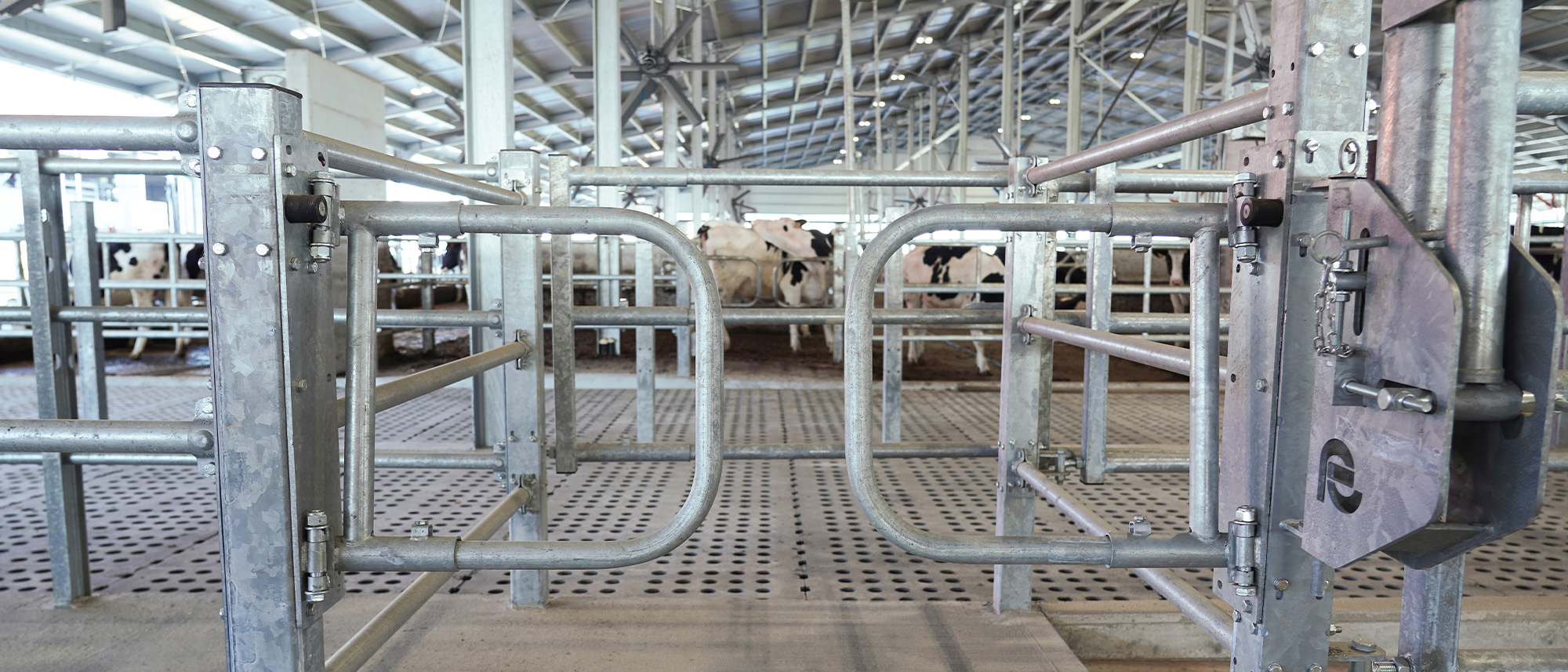
In the ‘toll booth’ configuration, the gates guide the cows naturally along a defined path, leading them towards an exit located on the opposite side to the robot’s entrance. In this way, the animal never returns to the starting point, but is incorporated into a continuous, organised flow. This configuration overcomes the limitations of free-flow systems, ensuring a clear separation of routes, reducing interference between animals and limiting prolonged stops within the robot. At the same time, it allows for the integration of mandatory functional passages, such as footbaths, which are often difficult to manage in traditional free-flow systems, thereby affecting the overall biosecurity of the farm.